































Data Risk Management
What are the major data risks for AI?
Data risks for AI relate to regulatory requirements, responsible AI use, and the ability for users to trust the outputs of AI models. As such the importance of data lineage for AI relates to transparency, risk, datasets, and accuracy. Regarding transparency, organizations need full visibility into where AI is used, which datasets have been used to train it, and which datasets it is used on – as well as which questions are asked of it. Businesses must also understand the level of risk of their AI model – which can also be impacted by the data used in it – such as sensitive information, as well as in which critical business use cases it is used. Companies must know and be transparent about all details relating to the types of information stored in datasets that are used in AI models. Someone may make a change to a dataset in one department that impacts a downstream AI model, so having visibility into this is critical, as it affects accuracy and reduces AI data risk.
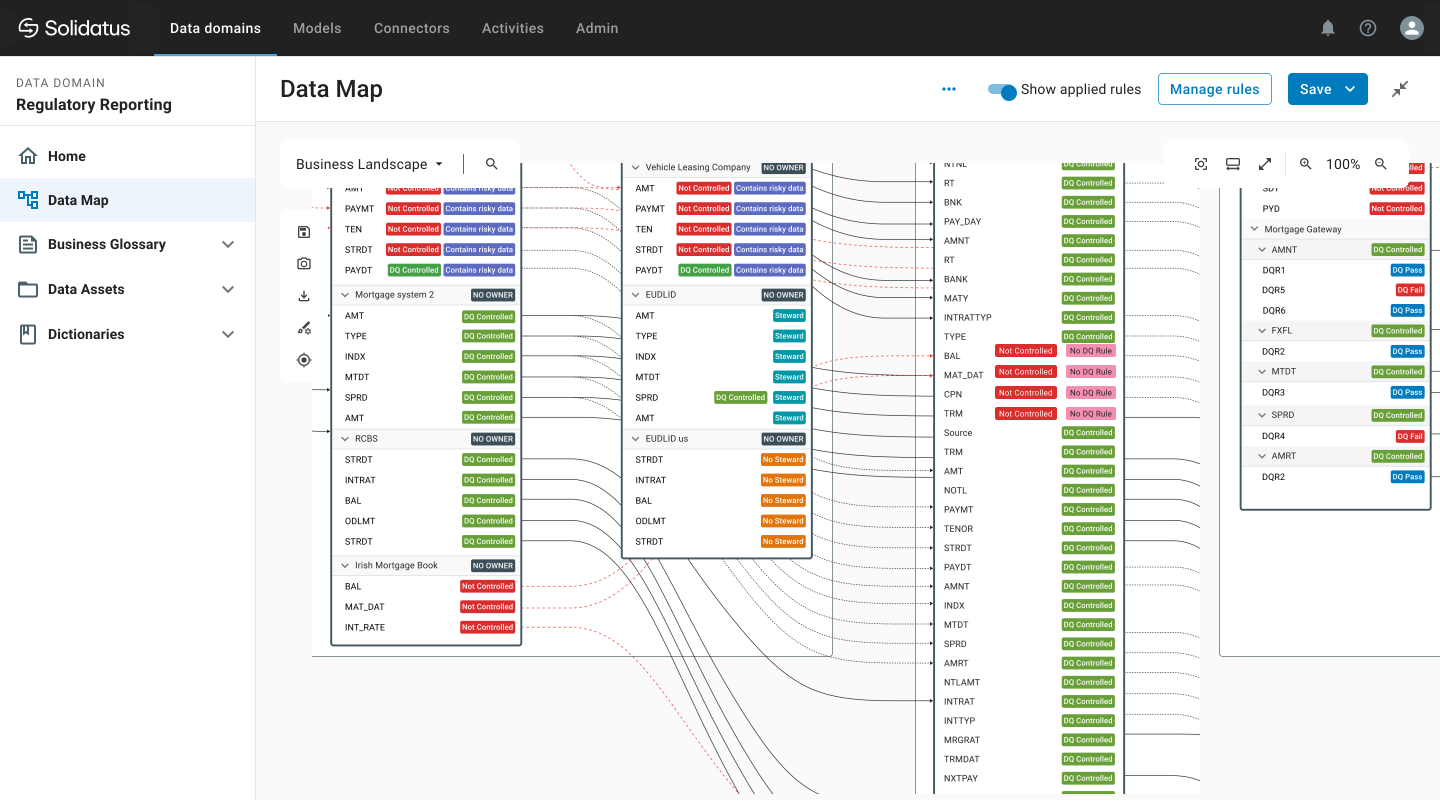
Solidatus advanced data lineage minimizes data management risks and provides controls. It helps you see where in the business AI is used, as well as details about the datasets used in AI and where they flow before and after their AI use – and importantly into which critical business use cases. You’ll know and be able to disclose if datasets use personal or internal information which may be too sensitive. You’ll also know key dataset information such as where it came from, when it started being used in an AI model, any copyright information – and so be able to disclose this for regulatory requirements. You are also able to see the impact of changes downstream on later AI models. All of this helps you assess your data governance risk level, as well as scoring on system usage, to highlight if AI is used, for example, in more than 5 critical business uses. (add diagram for ease?)
More FAQ Topics
Solidatus Integrations and Solutions
A Solidatus Integration enables Solidatus to ingest detailed information (metadata, lineage, transformations, etc) from external systems into structured models.
Types of Data Lineage
Column-level lineage is a form of lineage that goes to the level of detail of tracing the flow of data through your organization at the column level of a system – as opposed to only the table level.
Data Management
Data management is the process of collecting, keeping, and using data in a cost-effective, secure, and efficient manner
Data Migration
A data migration process involves selecting, preparing, extracting, and changing data in order to permanently move it from one software system to another
Data Tracing
Data tracing refers to being able to trace back from a critical business use case, such as an annual report or compliance requirement, to see the source, journey and changes of data that impact these use cases.
Metadata Management
Metadata management helps standardize a common language and description of data, using a set of policies, actions and software to gather, organize, and maintain it.
Data Transformation
Data integration tools allow data to flow between different technologies. One of the problems of using a data integration tool is that it might not capture the data flow – and lineage or any transformation that is happening when data moves from one technology to another.
Data Mesh and Data Fabric
Data mesh is a methodology of managing data, whereby instead of one central data control unit or team, data management is decentralized in an organization
Data Flows and Data Mapping
In data lineage, data mapping is the specific process of linking data fields from one data source to others.

Newsletter
Subscribe for the latest news, blogs, and resources.