





























Whether it’s cloud migrations, preparation and transformation for AI, or general change management, you rely on data flowing as and where it should, to keep business running as usual.
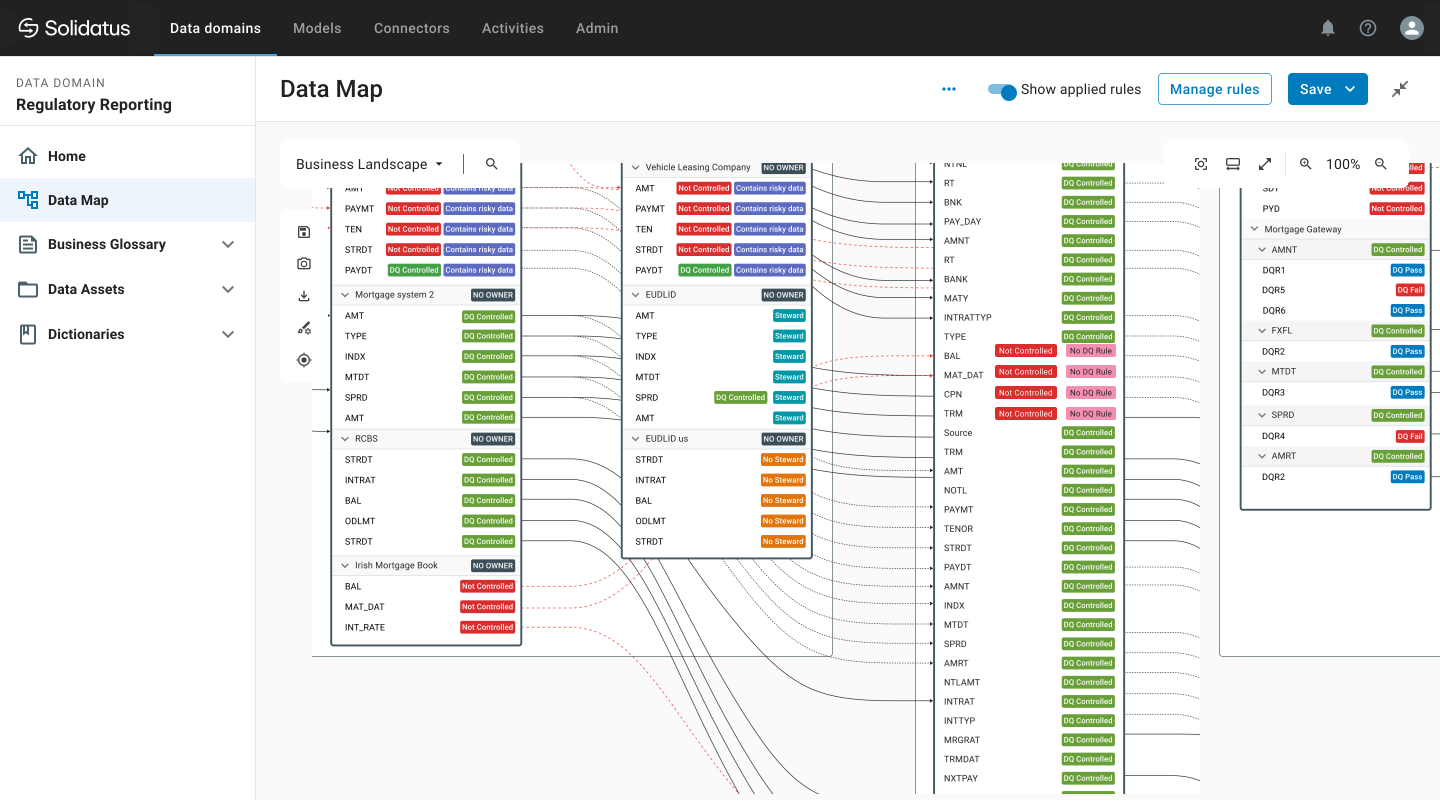
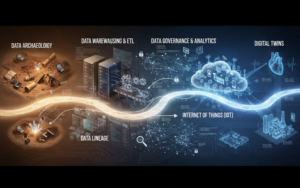
Having a visual representation of the current and potential systems in your business, showing where data flows and transforms, both now and into the future, allows you to prevent losing or damaging critical data in the process of transformations.
Proactively map and build a plan of your data estate at a granular level and within the context of the full business.
Scanning and discovery capabilities enable you to identify blind spots and dependencies, and reduce risks in migrations.
Granular, fine grain data lineage, with business information layered on top, allows you to find what the impacts and blockers might be to migrating successfully, so you can adapt plans accordingly.
Bi-temporal version technology allows you to see what-if scenarios and visualize how systems will be connected, once a new system is implemented.
You can demonstrate progress, conduct gap and impact analysis and see historic and future data flows.
In the discovery phase of a migration, a business wants to understand its current state, identify which data to move, and mitigate risk during the migration. Solidatus helps by: