



























A standard built for openness, and we support it
OpenLineage is an open, neutrally governed standard from the LF AI & Data Foundation. It gives data teams an automated, event-based way to capture technical lineage as their jobs run, often down to the column. Support is most mature for Apache Spark, with integrations for tools such as Airflow and dbt as adoption grows. Because it is an open standard, your lineage is not locked inside one vendor’s format, so you can move it between tools as your stack changes.
Solidatus supports OpenLineage for that reason. It gives your teams flexibility and choice, and it is a strong starting point for capturing lineage inside modern data pipelines. We ingest those events and build on them.
BEYOND THE EVENT STREAM
What a complete picture also needs
OpenLineage captures lineage from the tools instrumented to emit it, and most producers emit that lineage as jobs run. A complete, trusted view needs more than the standard alone provides.

Coverage of your whole data ecosystem
Data crosses mainframes, legacy systems, custom applications, and manual processes that modern-tool instrumentation does not reach.

Business and governance context
Events describe technical movement. Stewards and auditors also need glossary terms, ownership, and policy attached to that movement.

A version-controlled history
An event stream records what happened. Regulated reporting needs a model you can roll back to a point in time and compare across versions.

A stable model from high-volume events
Recurring jobs emit thousands of events for the same flow, and turning that stream into a clear, durable picture takes harmonization.
OpenLineage alone, or OpenLineage with Solidatus
OpenLineage gives you automated technical lineage from your modern tools. Solidatus keeps that and adds the coverage, context, and history a regulated enterprise needs.
Capability
OpenLineage alone
With Solidatus


Lineage type
Execution-based, captured when a job runs
Execution-based plus design-time, read from job definitions and modelling
Coverage
Instrumented tools, most maturely Apache Spark
Plus legacy, mainframe, and manual processes
Business and governance context
Technical metadata only
Glossary, ownership, and policy attached
History
Runtime event log
Version-controlled, point-in-time model
Impact analysis
A record of what already ran
Design-time analysis before you deploy
Audit readiness (BCBS 239, DORA)
Partial, technical snapshot
Complete, point-in-time evidence
How Solidatus turns events into a governed model
Ingest
The connector takes column-level lineage from any platform that publishes OpenLineage events. Support is most mature for Apache Spark.
Harmonize and curate
A pipeline running hourly can emit more than 700 events a month for the same flow. Solidatus consolidates those repeated job runs into one stable, versioned model of the underlying flow, and flags events that arrive without column-level detail so teams know where to add it.
Model and connect
Stewards and architects connect that automated lineage to the systems OpenLineage does not instrument, linking a Spark job to its mainframe source and the Power BI report it ultimately feeds. The AI Lineage Assistant speeds the work, suggesting connections from metadata patterns and extracting lineage from code and documentation.
Enrich and govern
The technical graph gains business glossary terms, ownership, data-quality scores, and regulatory policy.
Analyze and visualize
The model becomes a design-time asset under Git-like version control, ready for impact analysis and audit.
Design-time lineage, not only a record of what ran
Most OpenLineage producers, including Apache Spark, emit lineage events at runtime, so a flow that has not run yet stays invisible to them. Solidatus does not wait for the run. Static-analysis connectors read lineage directly from job definitions, and the AI-assisted modelling tool captures the rest, so the flow is mapped whether or not it has executed. Solidatus is the only platform with AI-assisted, design-time lineage modelling at this level of sophistication.

OpenLineage producers
Apache spark and other tools that publish OpenLineage
Solidatus integration layer
Ingest & harmonize events
Versioned cross-system model
+ legacy and mainframe sources stitched in
UI & Rest API
Audit, impact analysis, lineage as code
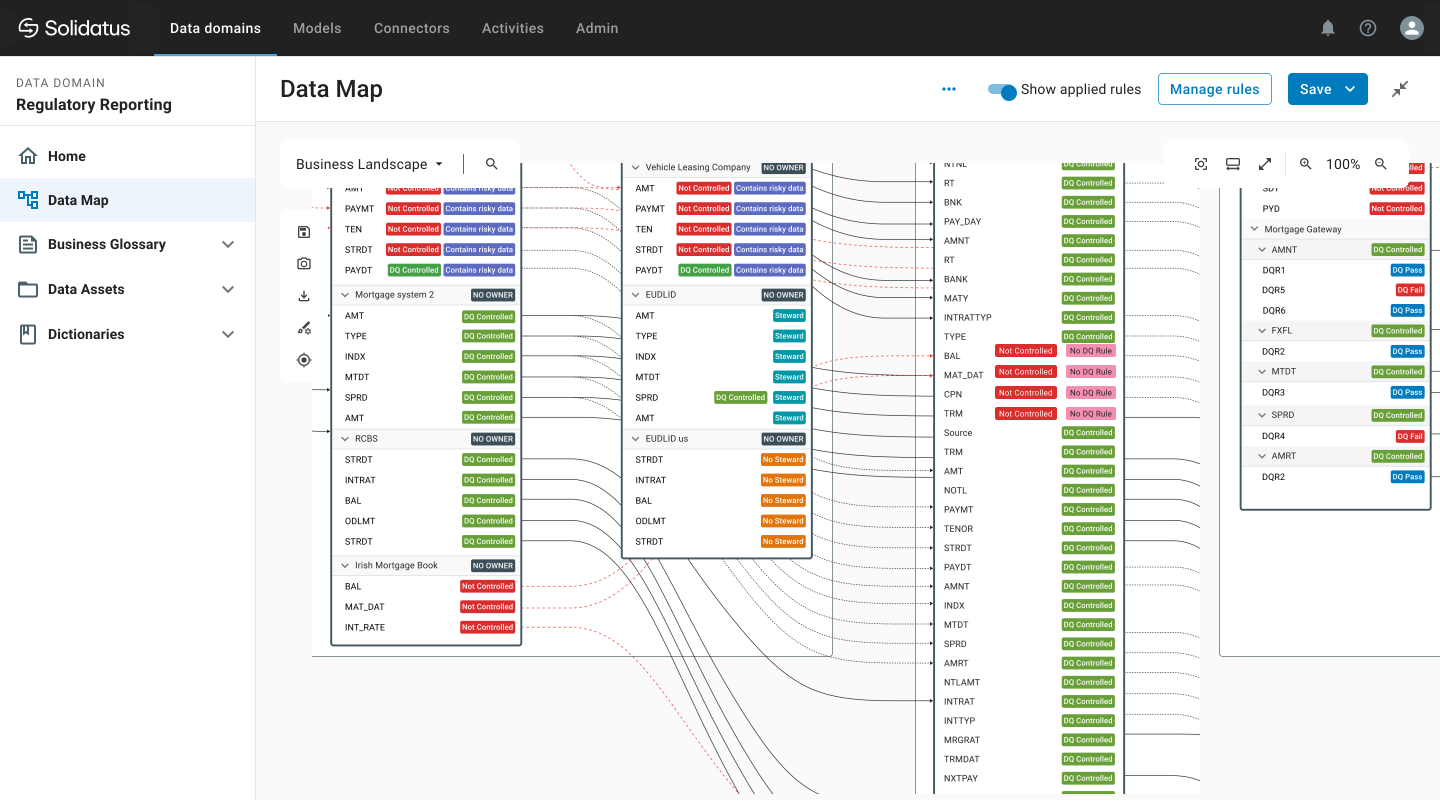
OpenLineage events are harmonized into a versioned Solidatus model, stitched to legacy and mainframe sources, and exposed through the UI and Rest API
FROM EVENTS TO OUTCOMES
What a governed model lets you do
Once OpenLineage events are part of a governed Solidatus model, your teams can do what a technical event stream alone cannot.

Point-in-time audit
Show how data flowed and was controlled at any moment in the past, for BCBS 239 and DORA, with an immutable version history.
Design-time impact analysis
Branch the model, simulate a change, and see the blast radius across connected systems before anything ships.
End-to-end traceability
Trace from a Power BI report back through a Spark job to its mainframe source, across technical and business systems.
Lineage as code
The full versioned model is queryable and manageable through REST APIs, so engineers can run pre-deployment impact analysis and build lineage validation into CI/CD pipelines.
An integration, with solution services when you need them
OpenLineage support is a Solidatus Integration, a deep connector you configure against your existing event stream to ingest, harmonize, and model lineage. For more complex deployments, our Solutions pair that technology with discovery, implementation support, and ongoing assistance. Many organizations start with the integration and add solution services as they extend coverage to mainframes, Microsoft Purview, or other systems that need deeper configuration.




OpenLineage and Solidatus: frequently asked questions
01.
What is the Solidatus OpenLineage integration?
The Solidatus OpenLineage integration is a connector that ingests automated lineage events from tools like Apache Spark, Apache Airflow, and dbt, then processes them inside the Solidatus platform. Rather than display raw events, Solidatus consolidates them into a stable, versioned lineage model, connects them to systems OpenLineage does not instrument, and enriches them with business glossary terms, ownership, and governance policy. The result is a single, governed view of how data moves across both modern and legacy systems, managed under version control for audit and impact analysis.
02.
Does Solidatus replace OpenLineage?
No. Solidatus supports OpenLineage as an open standard and works alongside it. OpenLineage captures automated, event-based lineage from modern data tools, and because it is neutrally governed by the LF AI & Data Foundation, it keeps your lineage portable across tools. Solidatus ingests those events and adds the layer enterprises need on top: cross-system modeling, business and governance context, version control, and point-in-time history. You keep the openness and flexibility of the standard and gain a complete, governed model of your data ecosystem.
03.
How does Solidatus handle high OpenLineage event volume?
Recurring jobs can emit thousands of OpenLineage events for the same data flow. Solidatus harmonizes that stream into a single, stable model of the underlying flow instead of storing every run as separate lineage. It consolidates repeated job executions into one versioned representation while preserving a link back to the runtime history, so the picture stays clear without losing detail. Events that carry only table-level information can be flagged for enrichment, so teams know where to add column-level detail or business context.
04.
What does Solidatus add that OpenLineage doesn't?
OpenLineage is an event-emission standard for technical lineage that describes what ran inside instrumented tools. Solidatus adds the capabilities a regulated enterprise needs around that: coverage of legacy, mainframe, and manual systems the standard does not instrument; business glossary, ownership, and policy context; Git-like version control with branching and visual diffs; point-in-time history for audit; and design-time impact analysis. It also makes the full model queryable through REST APIs. Together these turn a technical event stream into a governed, auditable map of the whole data ecosystem.
05.
Which tools can Solidatus ingest OpenLineage events from?
Solidatus can ingest OpenLineage events from any producer that emits them in the standard format. Apache Spark has the most mature OpenLineage support today, with integrations for tools such as Airflow and dbt as adoption grows. Because OpenLineage is an open standard, coverage grows as more tools in your stack adopt it. For systems that do not publish OpenLineage, such as mainframes or custom applications, Solidatus provides modeling tools to capture that lineage and stitch it to the automated events.
06.
How does the integration support BCBS 239 and DORA audits?
Regulations such as BCBS 239 and DORA expect organizations to show how data flows and is controlled, not only at present but at past points in time. A runtime event log alone cannot demonstrate that. Solidatus keeps an immutable version history of the entire lineage model, so governance teams can reconstruct how data moved and was governed at any chosen moment. Combined with business context and end-to-end coverage across modern and legacy systems, this gives auditors a complete, point-in-time view rather than a partial technical snapshot.
07.
Is OpenLineage support an integration or a solution?
It is a Solidatus Integration: a deep connector you configure against your existing OpenLineage event stream to ingest, harmonize, and model lineage. For more complex environments, Solidatus also offers Solution services that pair the technology with discovery, implementation support, and ongoing assistance. Many organizations start with the integration and add solution services as they extend coverage to mainframes, Microsoft Purview, or other systems that need deeper configuration.