
































Column-level lineage with business and policy context built in.
Map, govern, and query data across every system in your estate — cloud, on-premises, mainframe. Business context built in. Accelerated by AI. Governed by you.
Solidatus is an advanced data lineage platform for regulated enterprises that combines business and data lineage in one model. It maps data flows from source through every transformation to business use at column-to-policy depth, with bi-temporal version control and an AI Lineage Assistant with human-in-the-loop validation.








How Solidatus works
Three connected stages give technical teams, business users, and executives the same picture at the depth each needs.
Stage 1 — Capture
Ingest metadata from every system in your estate. Automated connectors for Snowflake, Databricks, Azure, AWS, Oracle, SQL Server, Informatica, dbt, and mainframes. Open API for everything else.
Stage 2 — Context
Layer ownership, SLAs, risk ratings, regulatory tags, PII classifications, and policy overlays onto the technical lineage. Business meaning becomes part of the record.
Stage 3 — Answer
Any stakeholder traces a report to its source, models a “what-if” change, or generates an audit pack without waiting on IT. Bi-temporal version control queries past, present, and planned future states.
Platform capabilities
Twelve capabilities, one connected platform
Built for the depth and scale of regulated enterprise data estates.
End-to-end lineage visualization
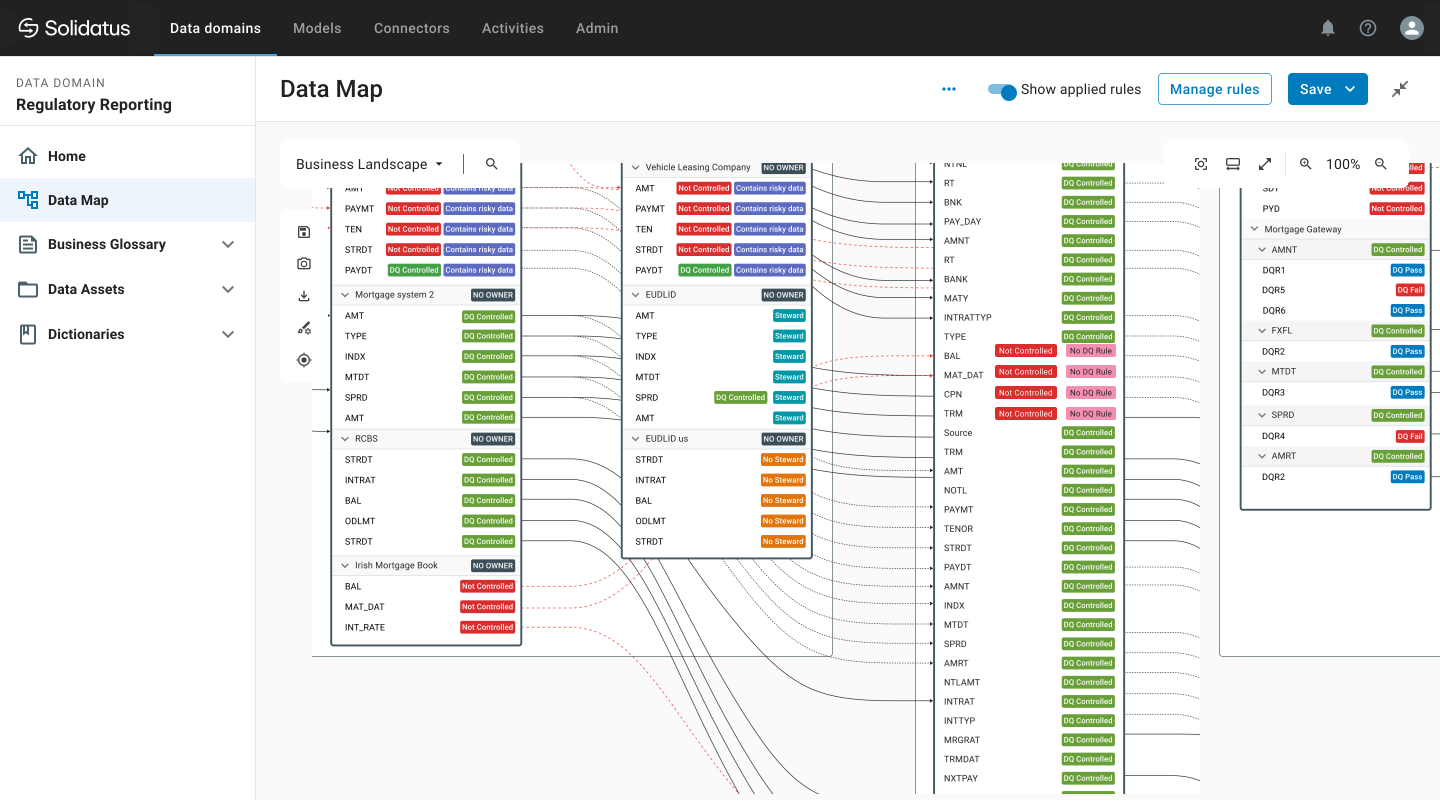
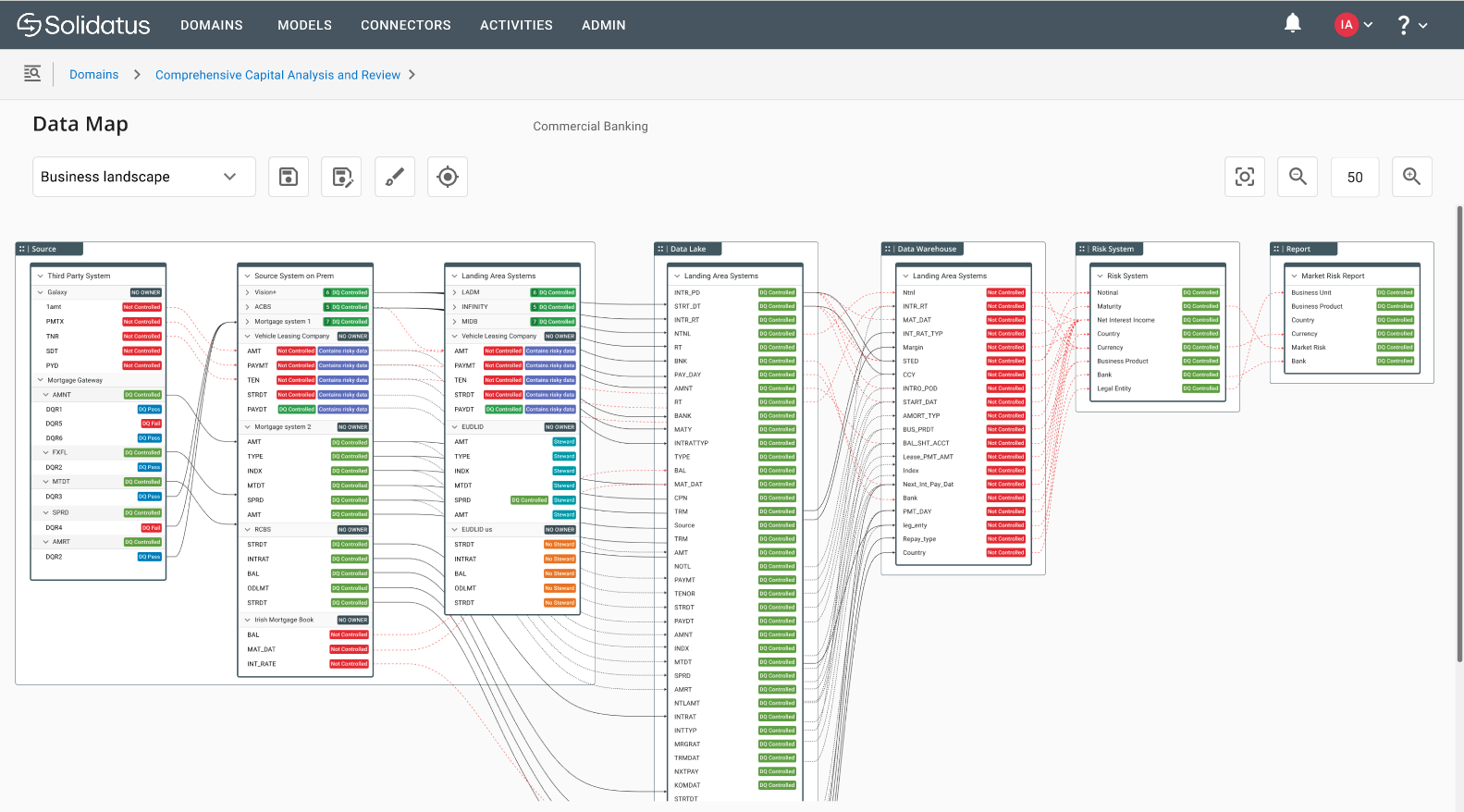
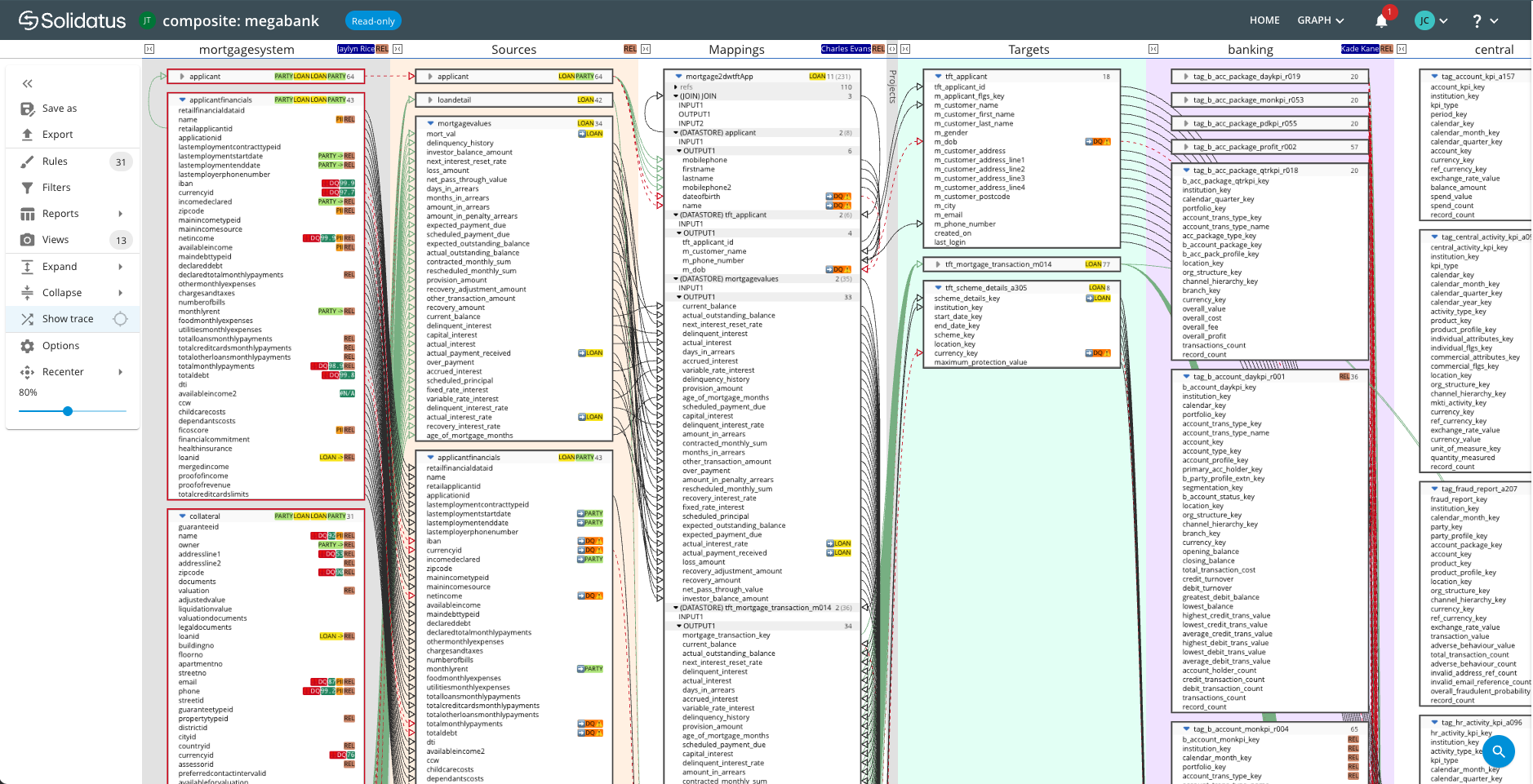
See data flows across every system in your estate — cloud, on-premises, and mainframe — on a single interactive map. Zoom from business architecture to column-level transformations without losing context.
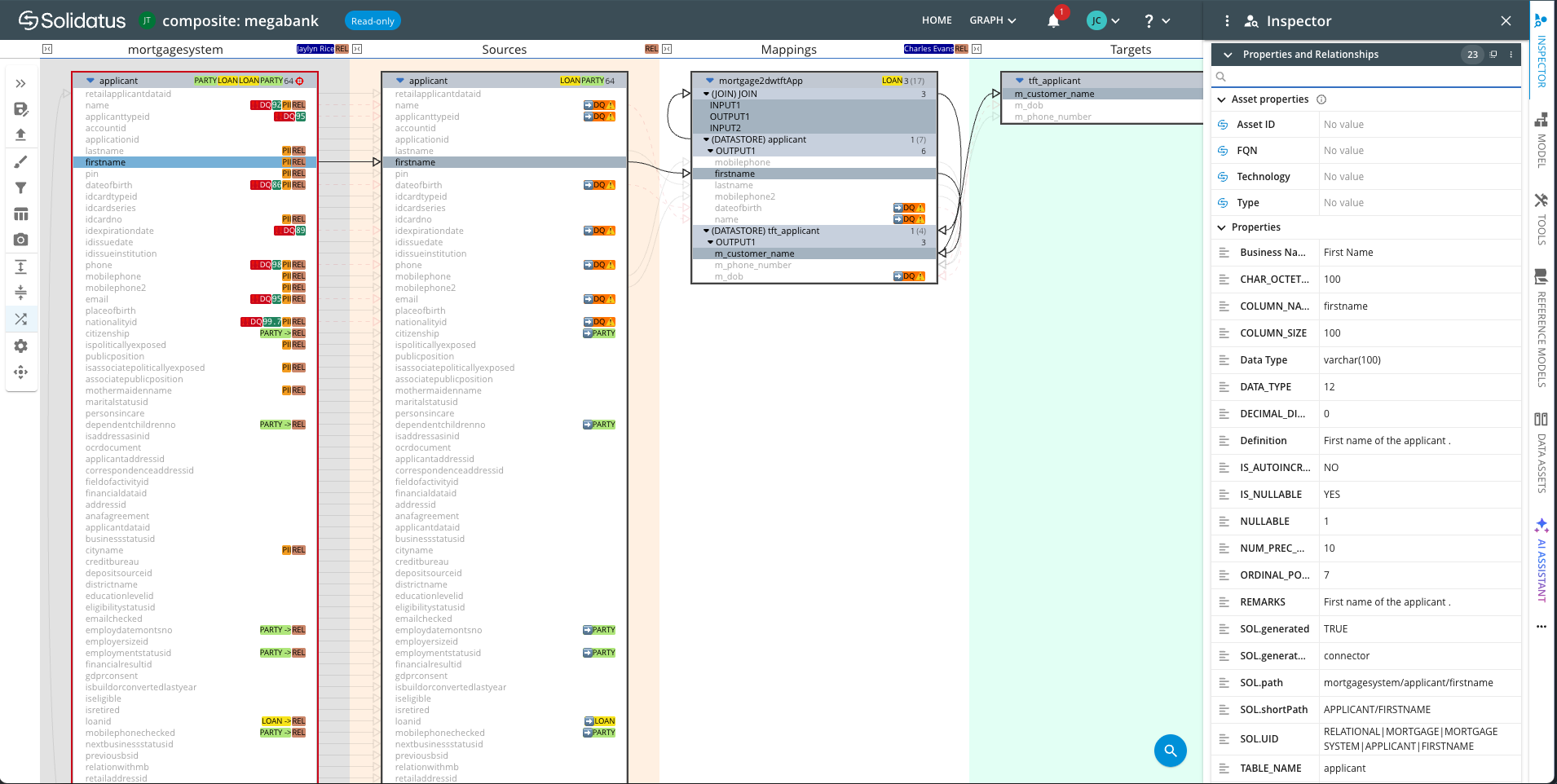
Column-level lineage, policy-aware
Track every column through every transformation — joins, filters, aggregations, business rules — and connect those flows to the policies, regulations, and owners that govern them. AI-drafted column mappings, with confidence scores, accelerate work at scale.
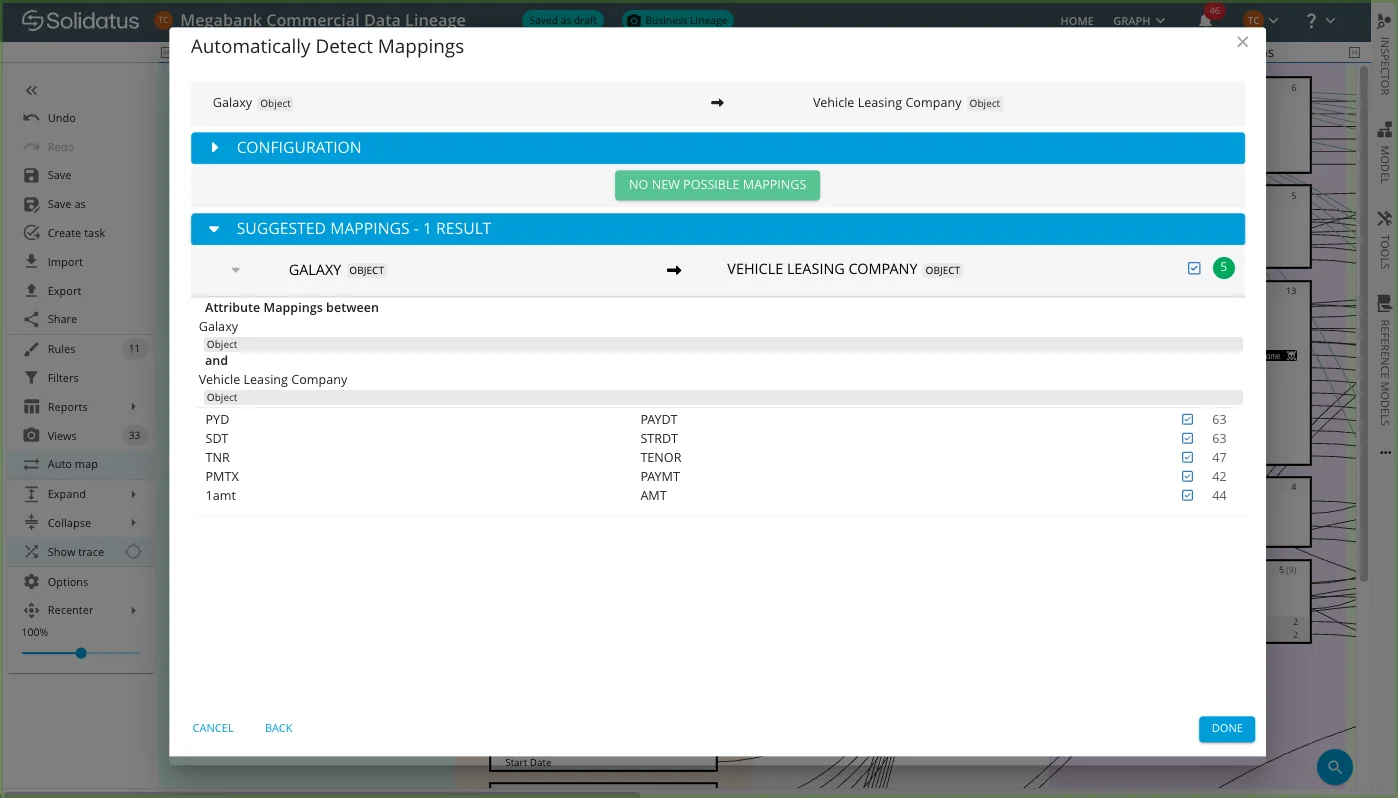
Visual model authoring and auto-mapping
Build and edit lineage models in a visual editor. Add entities, properties, and reference relationships with point-and-click authoring. Auto-map transitions with AI-assisted, confidence-scored mappings staged in a safety sandbox; diff mode compares revisions side by side.
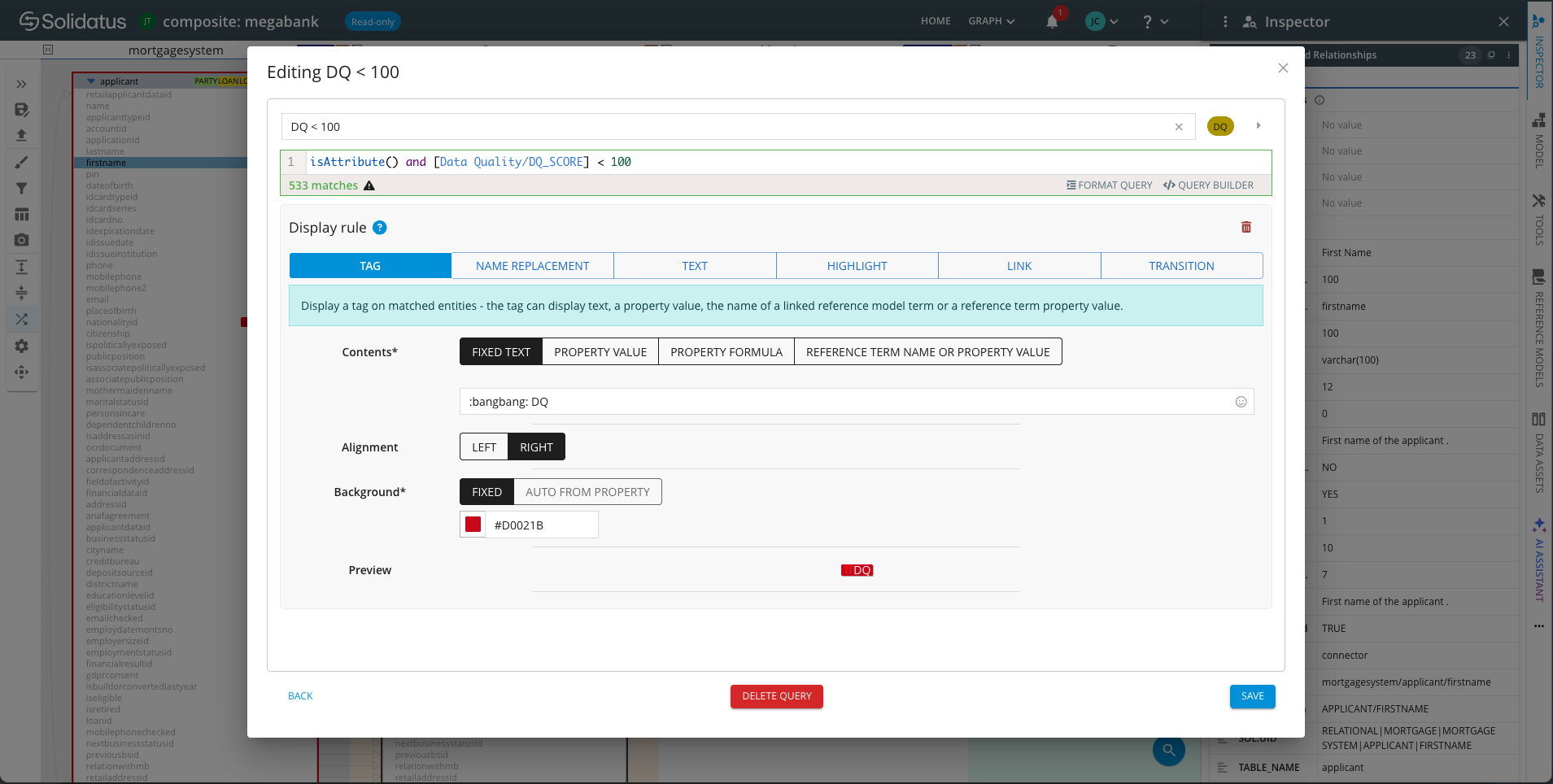
Rules-based impact analysis
Run impact analysis across every downstream report, model, dashboard, and AI training dataset before you change a source, pipeline, or business rule. Direct and indirect dependencies surface in minutes. Business users can ask the AI Lineage Assistant in natural language: “if I change this field, which calculations does it affect?”
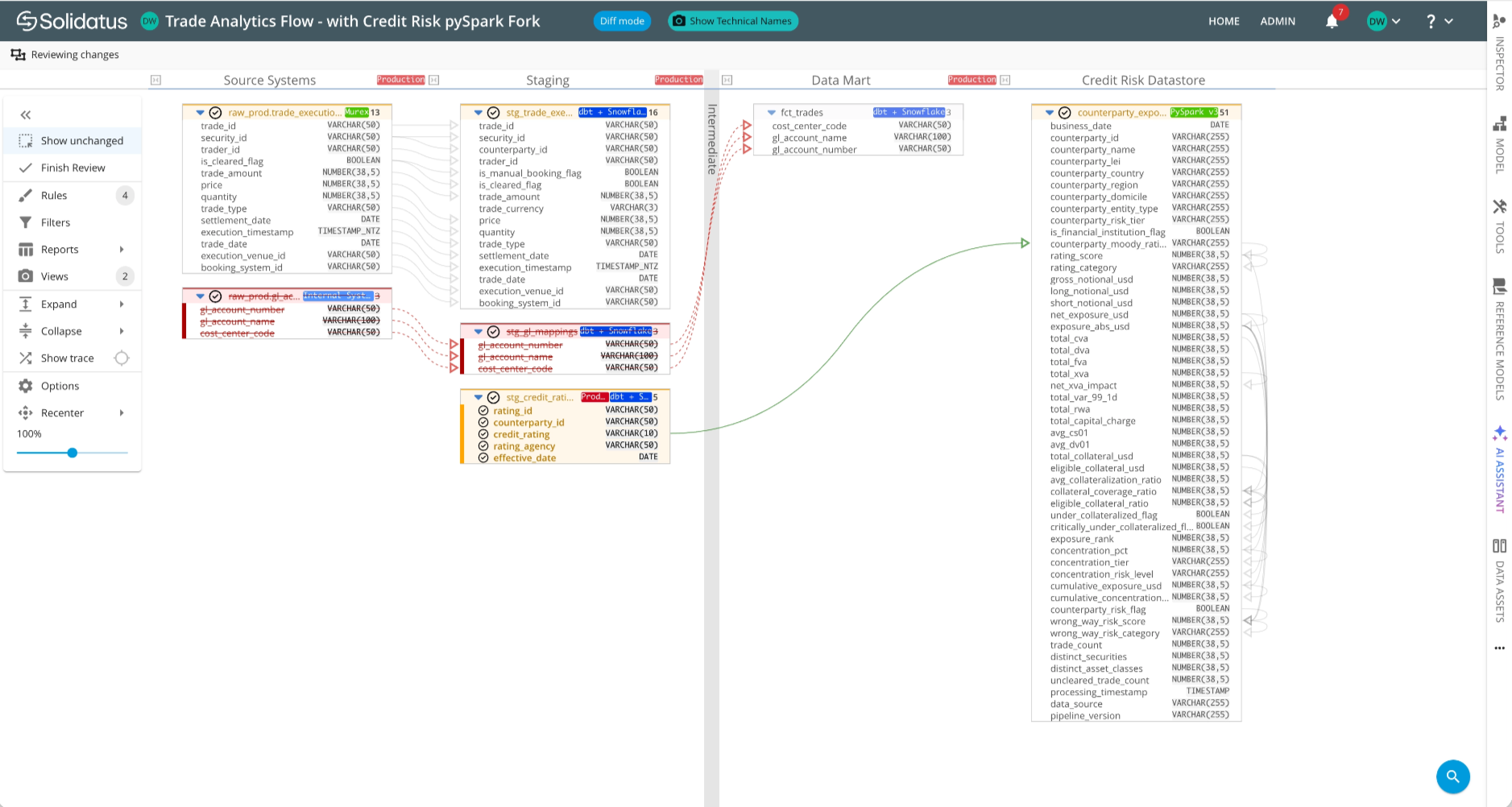
Bi-temporal version control
Record both business time and system time. Reconstruct your estate as it existed on any past reporting date. Model future-state changes before you commit to them.
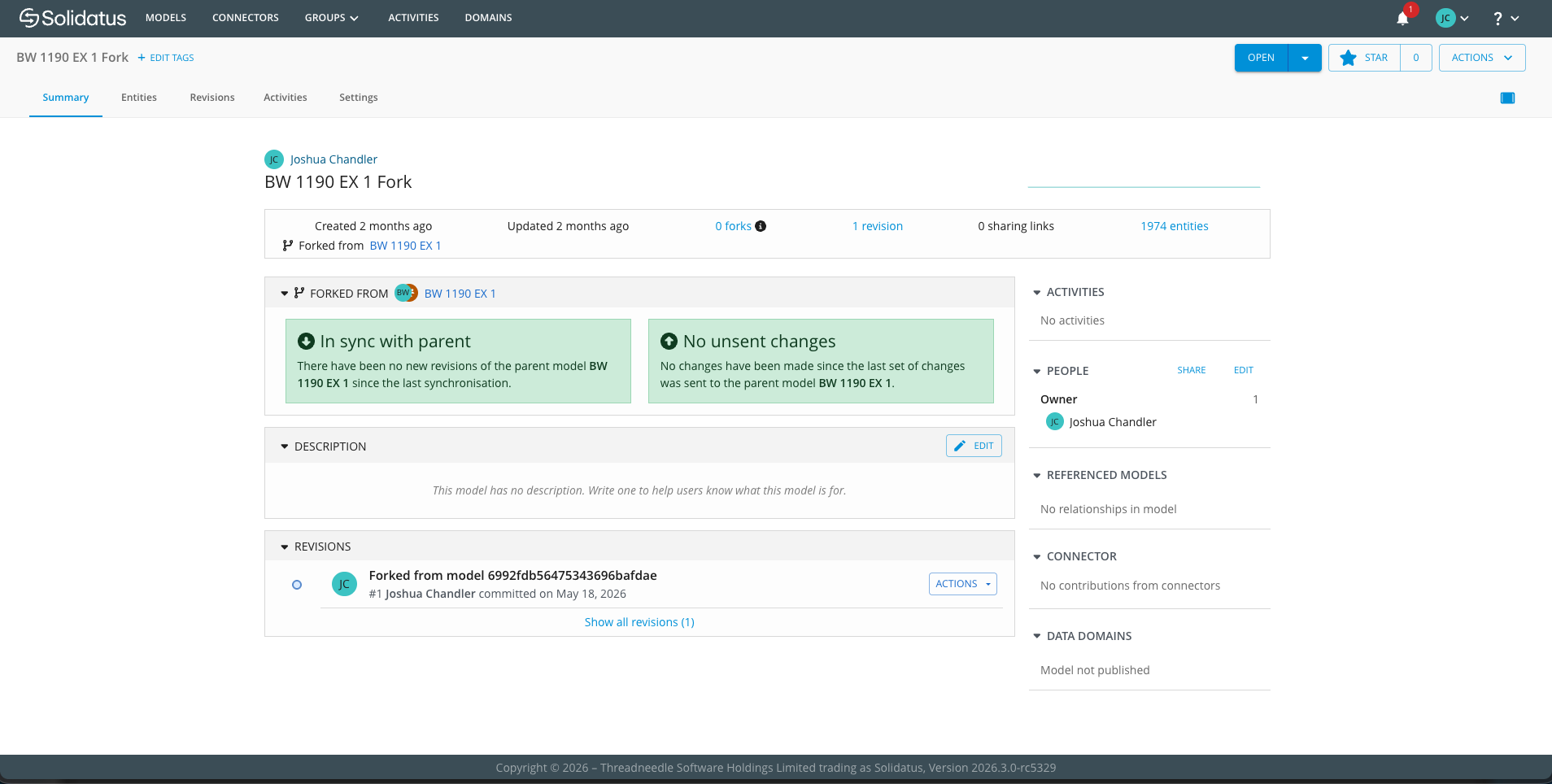
Forks, pull requests, and simultaneous editing
Work on lineage like code. Fork a model, edit in a branch, raise a pull request, and route through approvals before merge. Simultaneous editing lets multiple users author the same model in real time.
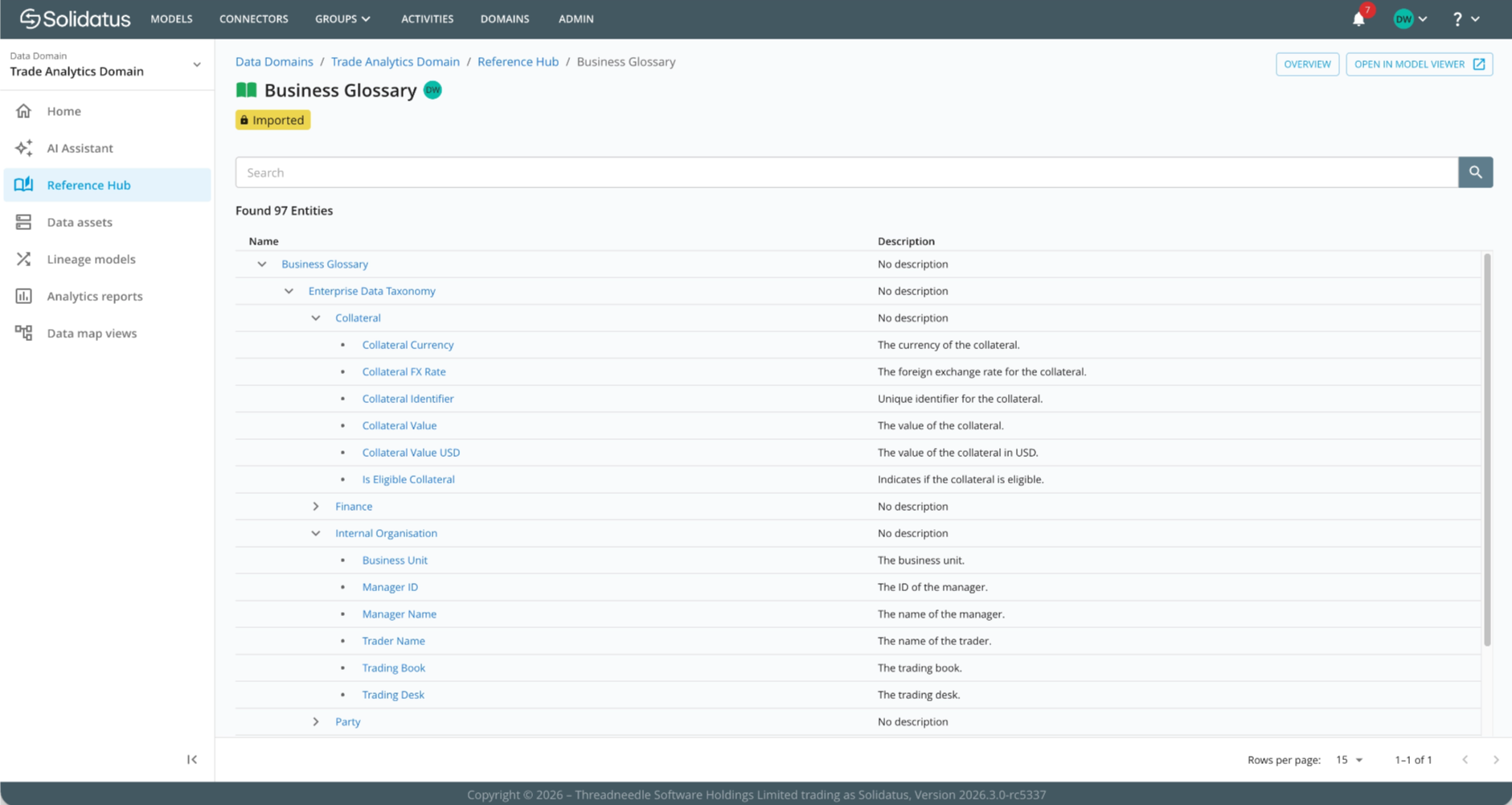
Business context and ownership
Attach ownership, stewardship roles, SLAs, risk ratings, and regulatory classifications to every node. Business glossary integration maps technical columns to business terms. The AI Lineage Assistant drafts glossary mappings and classifications from technical metadata and PDFs, staged for human review.
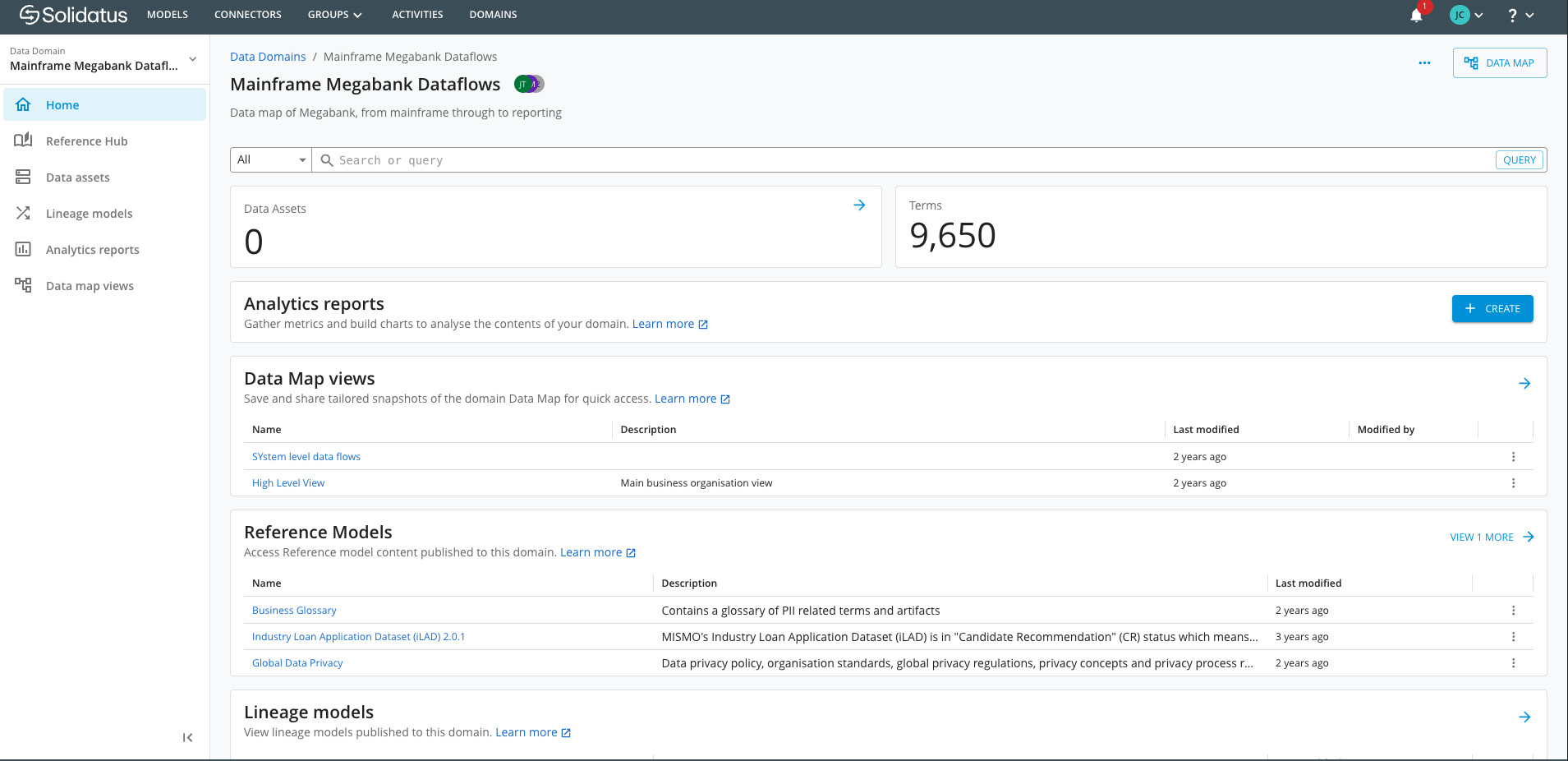
Data Domains and Data Maps
Publish governed lineage for business discovery. Data Domains combine lineage, reference, and context models into a single browsable surface. Data Maps visualize mappings for regulatory and operational reporting.
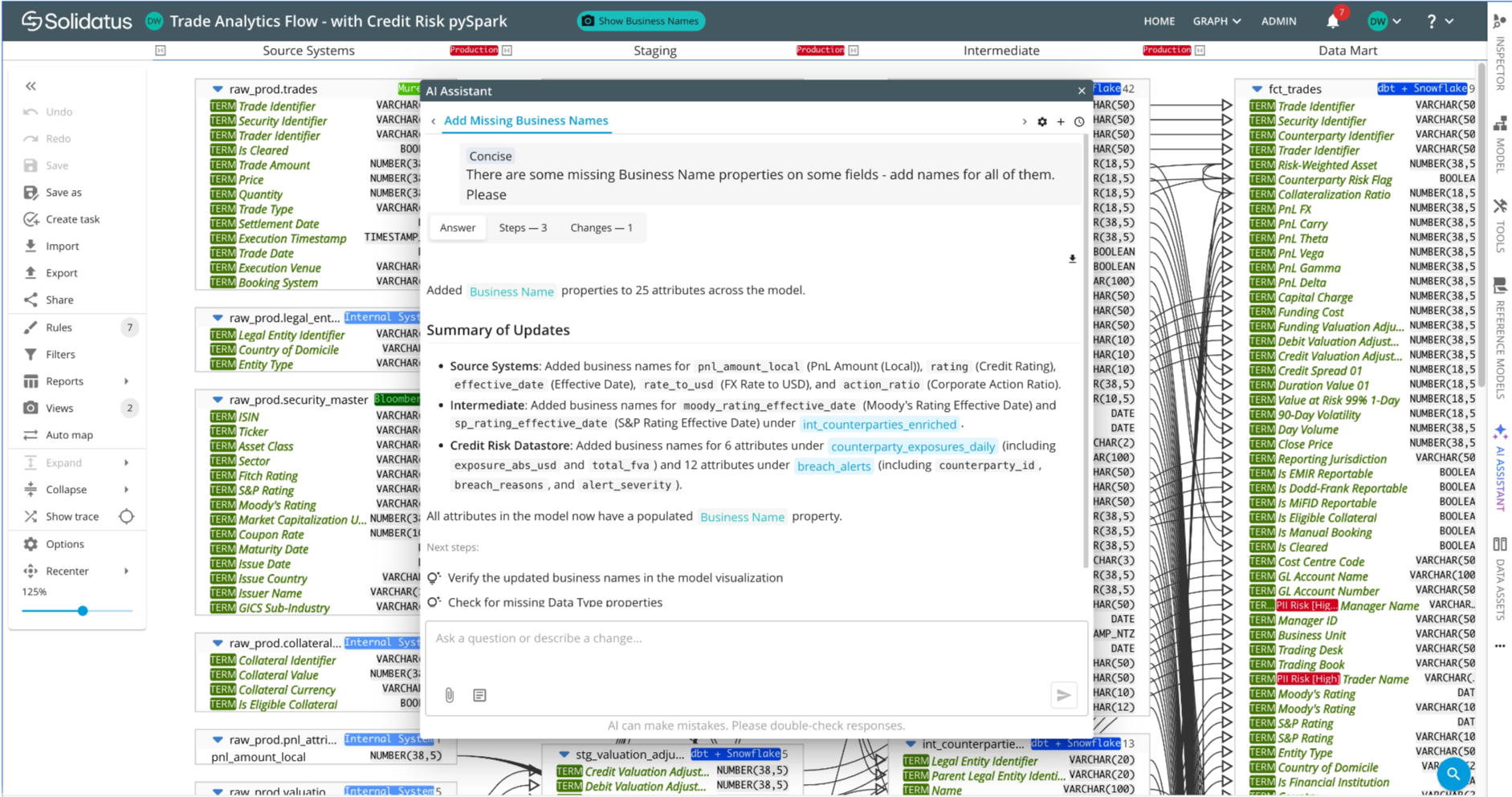
AI Lineage Assistant
Accelerate lineage work with AI-drafted mappings, proposed connections, enriched metadata, and unstructured-document extraction. Every change is staged with visual diffs, confidence scores, and hallucination detection.
Policy, quality, and attestation workflows
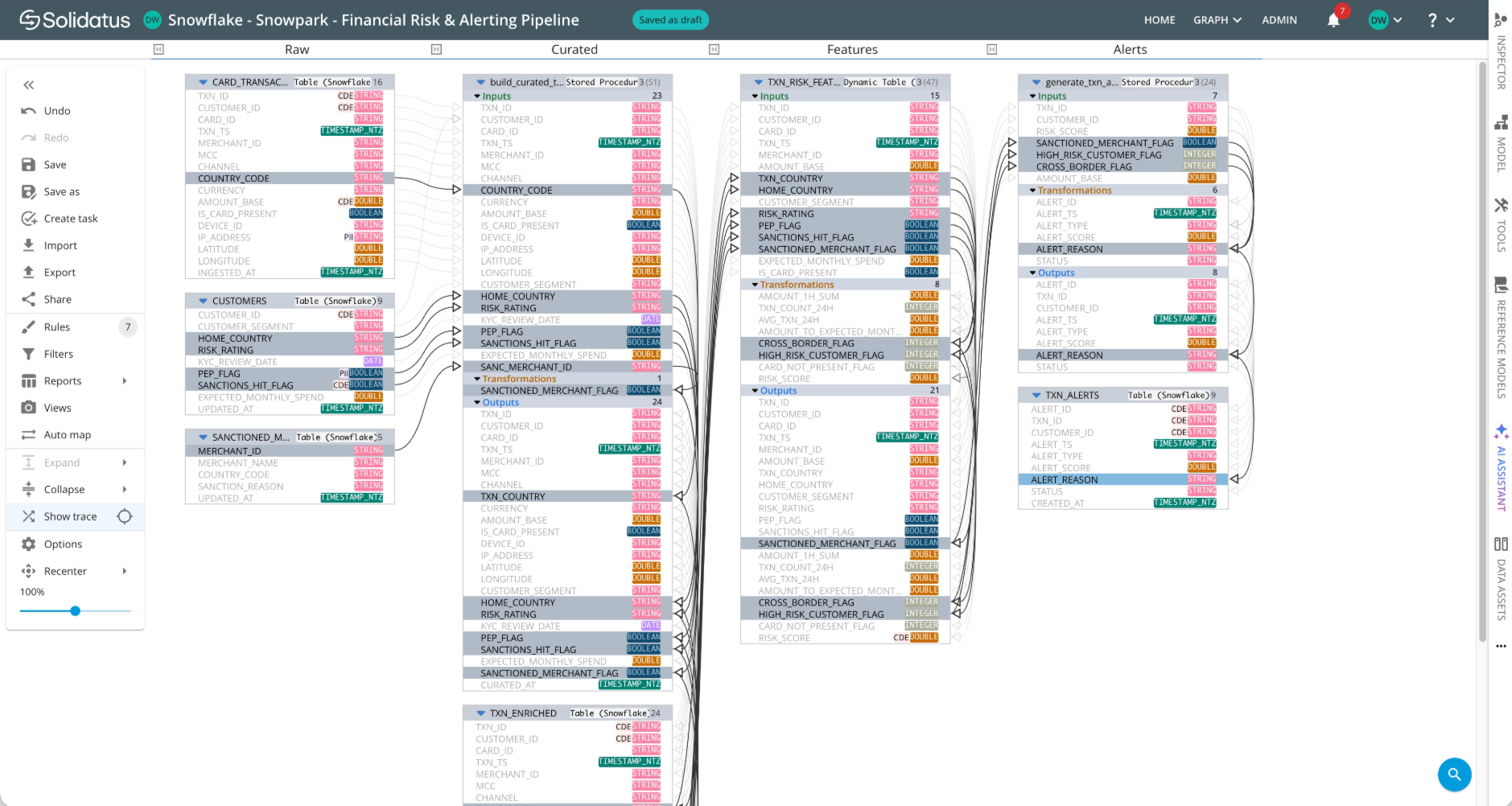
Run rules-based analytics for data quality, accuracy, completeness, and PII detection. AI-suggested PII and policy classifications speed up tagging at scale, with hallucination detection and visual diffs before changes are accepted. Regulatory overlays for BCBS 239, DORA, EU AI Act, and GDPR automate audit-pack generation.
Analytics reports and metrics
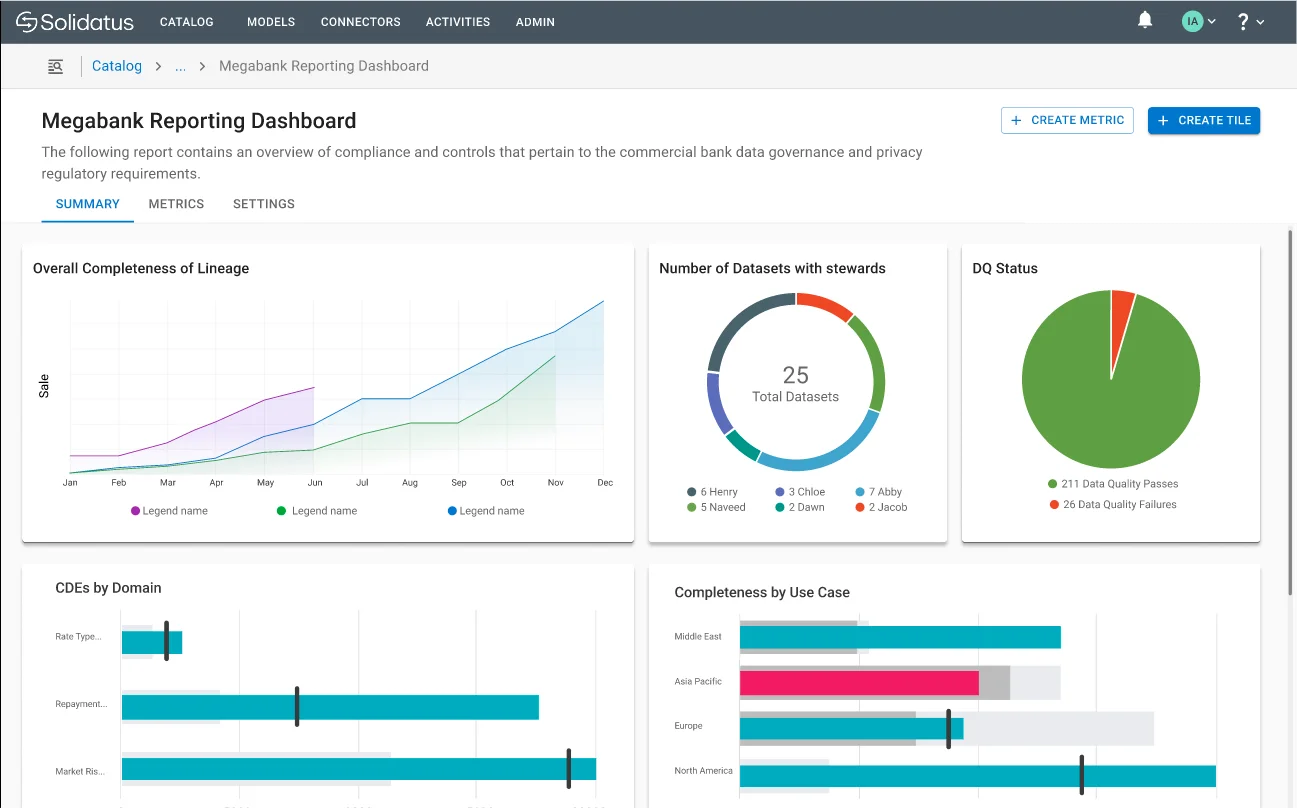
Build custom dashboards on top of your lineage. Define metrics, chart them, and share analytics reports with stewards and executives. Track coverage, attestation completeness, and policy adherence.
Connected catalog and integrations
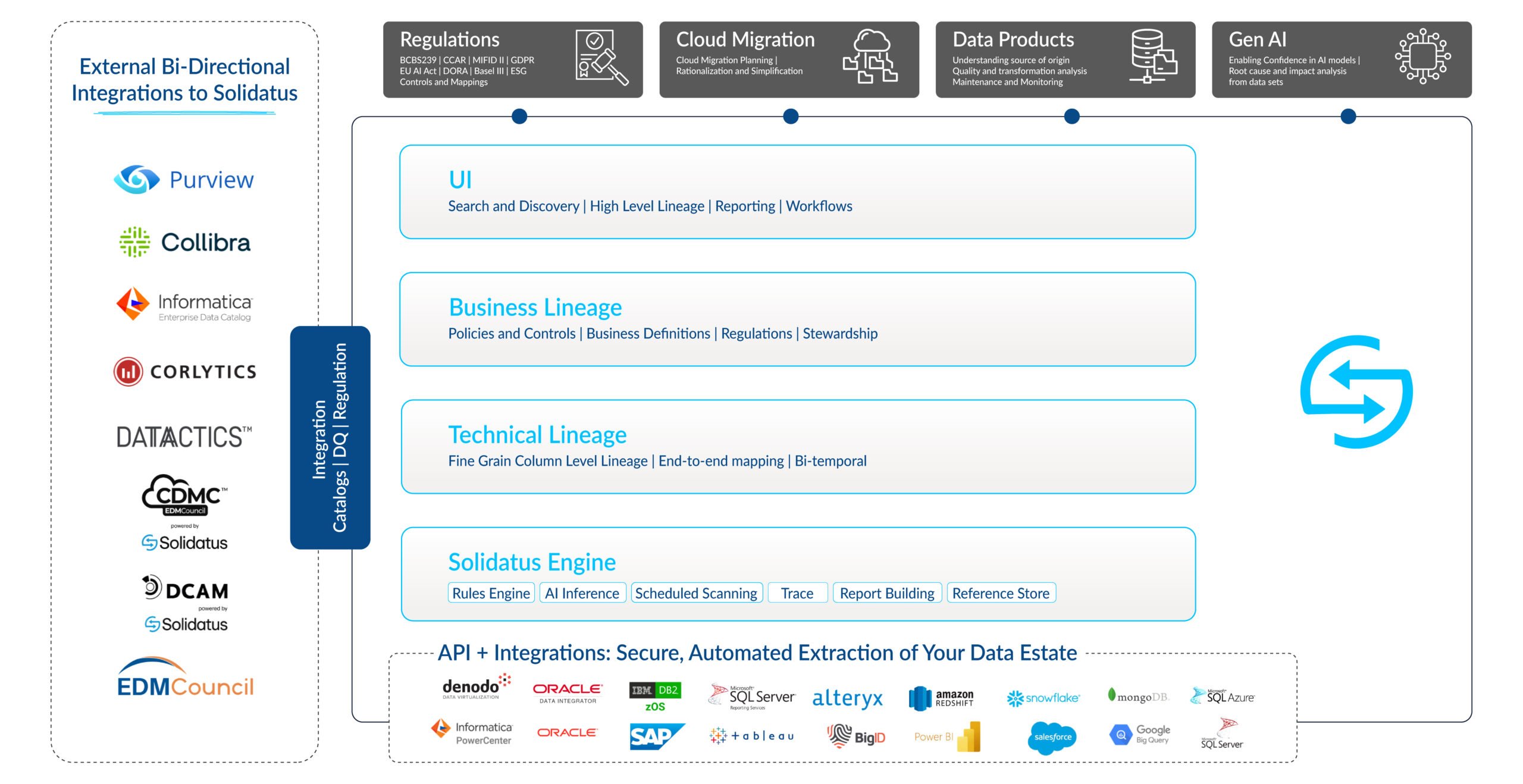
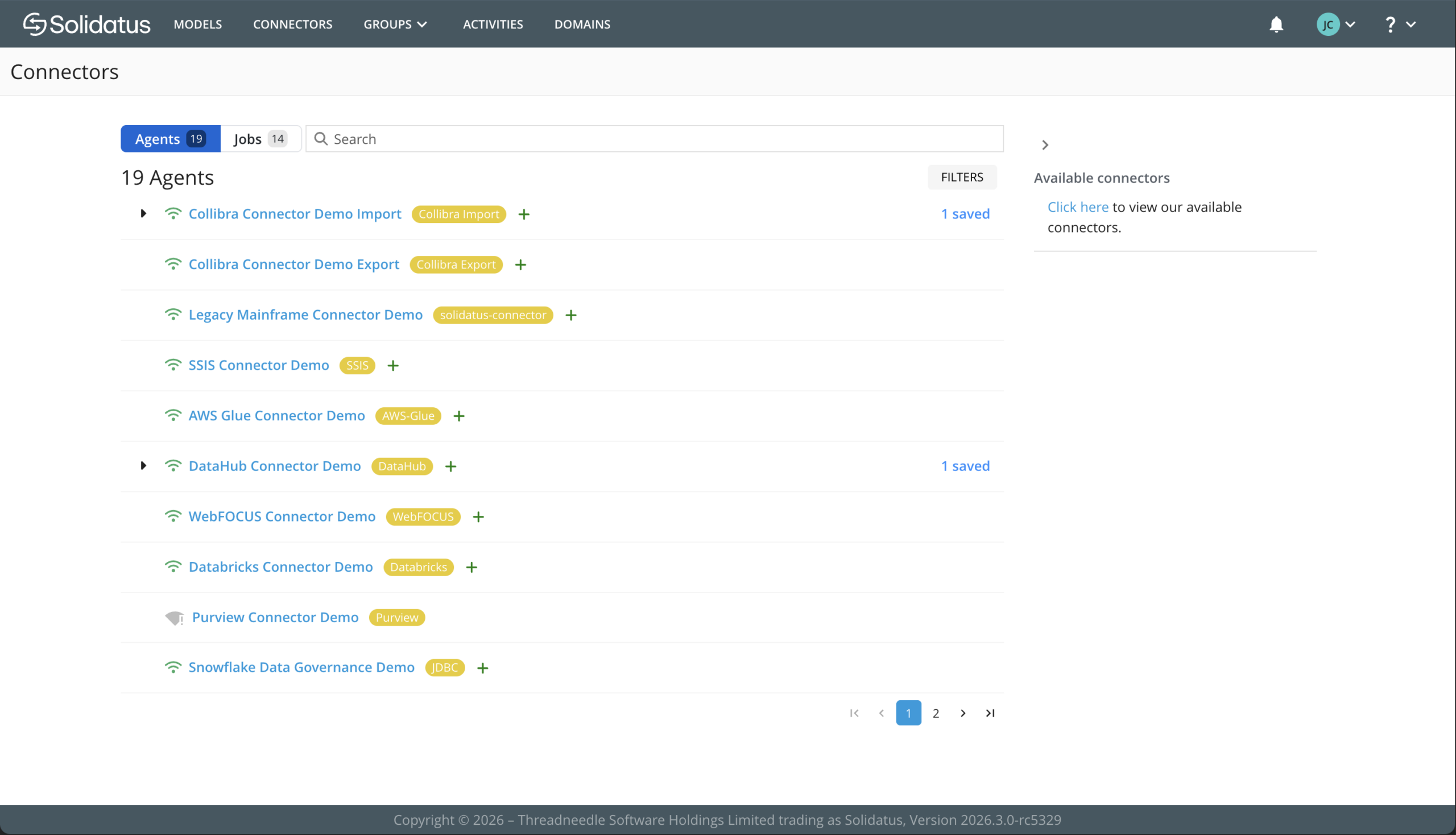
40+ connectors across cloud, databases, ETL, BI, and mainframes. The AI Lineage Assistant enriches Purview, Collibra, and Informatica metadata with lineage relationships and regulatory mappings. Full REST API plus Java Connector SDK for custom integrations.
Workflow walkthroughs
Three common workflows that show the platform end to end.
Who runs this workflow
Compliance officer, with data stewards and IT support
1
Select scope
Filter the lineage map to risk-reporting datasets in-scope for BCBS 239.
2
Apply overlays
BCBS 239 regulatory overlay tags the columns, transformations, and reports subject to the regulation.
3
Trace authoritative sources
Solidatus traces every BCBS 239 data point back to its authoritative source system, with full transformation history.
4
Validate completeness
Bi-temporal view confirms the lineage was accurate as of the reporting date.
5
Generate audit pack
Export a versioned, timestamped audit pack with source-to-report traceability, ownership, and policy attestation.
6
Respond to auditor questions
Stakeholders trace any specific number on a report back to its source in minutes, not weeks.
Typical outcome
Audit prep reduced from months to minutes. Used at a global investment bank to automate BCBS 239 evidence generation.
Who runs this workflow
Enterprise architect or platform lead, with data engineering and risk teams
1
Model the current state
Solidatus captures the as-is lineage of the systems scheduled for migration.
2
Identify downstream dependencies
Rules-based impact analysis lists every report, dashboard, AI model, regulatory filing, and business process that consumes data from the source systems.
3
Model the future state
Bi-temporal “what-if” mode lets you stage the target architecture alongside the source without disrupting production lineage.
4
Flag breakage risks
The diff view highlights column mappings, transformations, and policy attachments that need attention before cutover.
5
Sequence the migration
Use the dependency map to plan the cutover in phases, starting with the least-coupled systems.
6
Validate after cutover
Compare post-migration lineage against the planned future state to confirm data flows are intact.
Typical outcome
Used to map 175,000+ fields across 41 systems during a platform migration and cloud transformation.
Who runs this workflow
Data science lead, with governance and legal support
1
Identify the training dataset
Select the dataset used to train a specific model version.
2
Trace to authoritative sources
Solidatus maps every feature back through feature engineering, cleaning, and raw source columns.
3
Audit data permissions
Policy overlays flag any feature sourced from data with usage restrictions (PII, contract-limited, region-locked).
4
Document for the EU AI Act
Generate the provenance record required for high-risk AI systems under Article 10 of the EU AI Act.
5
Monitor for upstream drift
Rules-based alerts fire when an upstream source changes format, frequency, or quality in ways that could affect model accuracy.
6
Re-validate on model retraining
Bi-temporal comparison shows whether the training data provenance has shifted between model versions.
Typical outcome
Audit-ready AI provenance documentation, with ongoing monitoring for data drift that could silently degrade model accuracy.
Architecture and deployment
API-first, enterprise-scale, with deployment options that match your security and sovereignty requirements.
SaaS
Fully managed on Azure, AWS, or GCP. Automatic updates. Best fit for teams that want fast time-to-value without infrastructure overhead.
On-premises
Installed in your data centers for complete data sovereignty. Best fit for organizations with strict data residency, air-gap, or regulatory requirements that preclude cloud hosting.
Private cloud / hybrid
Deployed in your private cloud tenancy, or hybrid across on-prem (sensitive data) and cloud (analytics). Best fit for regulated enterprises with mixed data classifications.
Architecture capabilities
- API-first. Modern REST API and SDK for custom connectors, automations, and downstream integrations.
- BYOLLM for AI. Bring your own LLM (Gemini, GPT-4, Claude, Azure OpenAI, or customer-hosted).
- Enterprise security. ISO 27001
- Containerized microservices. Enterprise-grade scalability and deployment flexibility.
- Flexible metadata store. Graph-based model designed for cross-system lineage and bi-temporal queries at scale.
- Role-based access. Fine-grained permissions for lineage visibility and editing.
Built for enterprise scale
Real numbers from real deployments
The scale your organization actually needs.
1 billion+
Fields modelled across all customer environments — the aggregate scale Solidatus runs in production today.
190 million+
Fields in the largest single deployment, modeled across 100s of source systems.
55,000+
Data linkages modeled in a single deployment.
Months → Minutes
Impact-assessment time after deploying Solidatus for change management and audit response.
Solidatus vs. catalog-level lineage
Seven capabilities that separate advanced lineage from catalog-bundled lineage.
Capability
Catalog-level lineage
Solidatus

End-to-end cross-system lineage (cloud, on-prem, mainframe)


Column-level detail with full transformation context
Rules-based impact analysis across systems
Bi-temporal version control for audit and "what-if"
Regulatory overlays (BCBS 239, DORA, EU AI Act, GDPR)
AI-assisted lineage with human-in-the-loop validation
Unstructured document extraction (PDF, Excel)
Catalog-level lineage from Collibra, Alation, and Microsoft Purview can coexist with Solidatus.
See integrationsTerrence Hedin, LSEG — on why advanced data lineage is the foundation for regulated AI at the world’s largest stock exchange.
See all customer case studiesIntegrates with the systems you already run
Cloud & data platforms
Snowflake
Databricks
Azure Synapse
Azure Data Factory
AWS S3
AWS Glue
AWS Redshift
Google BigQuery
Databases & transformation
Oracle
SQL Server
Informatica
dbt
Matillion
BI & analytics
Tableau
Power BI
Looker
Qlik
Catalogs (works alongside)
Microsoft Purview
Collibra
Alation
Frequently asked questions
01.
What is Solidatus?
Solidatus is an advanced data lineage platform for regulated enterprises that combines business and data lineage in one model. It maps data flows from source to business use at column-to-policy depth, with bi-temporal version control and an AI Lineage Assistant with human-in-the-loop validation. Customers include LSEG, BNY, HSBC, Deutsche Bank, and Royal London Asset Management.
02.
How does Solidatus differ from catalog-level lineage?
Catalog-level lineage indexes what data exists and provides basic technical impact analysis. Solidatus delivers capabilities catalogs cannot: end-to-end cross-system lineage with automated mapping, rules-based impact analysis, bi-temporal version control for audit trails and what-if scenarios, regulatory overlays for BCBS 239 and the EU AI Act, business context enrichment with ownership and policy tags, and AI-assisted lineage generation with human-in-the-loop validation.
03.
What systems does Solidatus connect to?
Solidatus integrates with cloud data platforms (Snowflake, Databricks, Azure, AWS, GCP), databases (Oracle, SQL Server), transformation tools (Informatica, dbt, Matillion), BI platforms (Tableau, Power BI, Looker, Qlik), and legacy mainframes. It works alongside data catalogs including Collibra, Alation, and Microsoft Purview. An open API and SDK support custom connectors for bespoke and internal systems.
04.
How is Solidatus deployed?
Solidatus is available as a SaaS platform on Azure, AWS, or GCP, deployed on-premises in your data centers, or in a private cloud tenancy. Hybrid deployments split sensitive data on-premises and analytics in the cloud. The platform uses a modern, API-first architecture with containerized microservices.
05.
What is bi-temporal version control, and why does it matter?
Bi-temporal version control records both business time (when a data event occurred) and system time (when it was recorded). That dual axis lets you reconstruct your data estate as it existed on any past reporting date, track how issues were resolved, and model future-state changes before you commit to them. Audit teams use bi-temporal to reproduce historical state. Change programs use it to de-risk cloud migrations and platform consolidations.
06.
How does the AI Lineage Assistant work?
The AI Lineage Assistant is built directly into the Solidatus platform. It drafts mappings, proposes connections, enriches metadata, and converts unstructured documents (PDFs, Excel, images) into structured lineage models. Every AI-generated change is staged in a safety sandbox with visual diffs and hallucination detection, so your team reviews and approves before anything reaches production. Customers can use their own enterprise LLM (BYOLLM) or have Solidatus host the model infrastructure.
07.
How does Solidatus support regulatory compliance?
Solidatus provides purpose-built capabilities for regulations that require demonstrable data lineage. For BCBS 239, end-to-end traceability from risk reports back to authoritative data sources with bi-temporal audit trails. For DORA, critical data flows across ICT systems for operational resilience testing and incident reporting. For the EU AI Act, traces AI model inputs to their sources and documents the provenance the regulation requires. For GDPR, tracks PII at column level and supports subject access request workflows.
08.
Can Solidatus work alongside our existing data catalog?
Yes. Solidatus is designed to coexist with catalog-level tools including Collibra, Alation, and Microsoft Purview. It enriches catalog metadata with deep lineage context, business relationships, and regulatory mappings, extending rather than replacing existing governance investments. Bidirectional sync with Microsoft Purview is supported.

Solidatus Chosen as Microsoft Purview’s Data Lineage Integration Partner
Microsoft names Solidatus as key technology partner in their reimagined data governance experience with Microsoft Purview.
Advanced Data Lineage: A Blueprint for Business Success
Understand the business impact of basic data lineage vs modern, advanced data lineage

Reduce Risk and Stay Compliant with Advanced Data Lineage
Understand how advanced data lineage from Solidatus ensures compliance with BCBS 239