



























Why detailed lineage matters
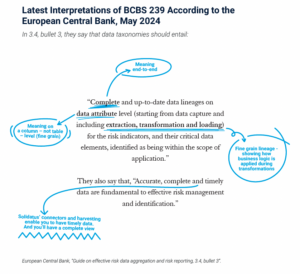
A blind spot in one system breaks the chain. If your lineage stops at the modern tools, you cannot prove where regulated data came from, predict what a change will break, or protect the data feeding your reporting and AI. Solidatus reaches deep into modern platforms and into the legacy, mainframe, and hard-to-instrument systems other tools leave out. That completeness turns a static metadata record into lineage you can use for impact analysis.
Solidatus technology integrations
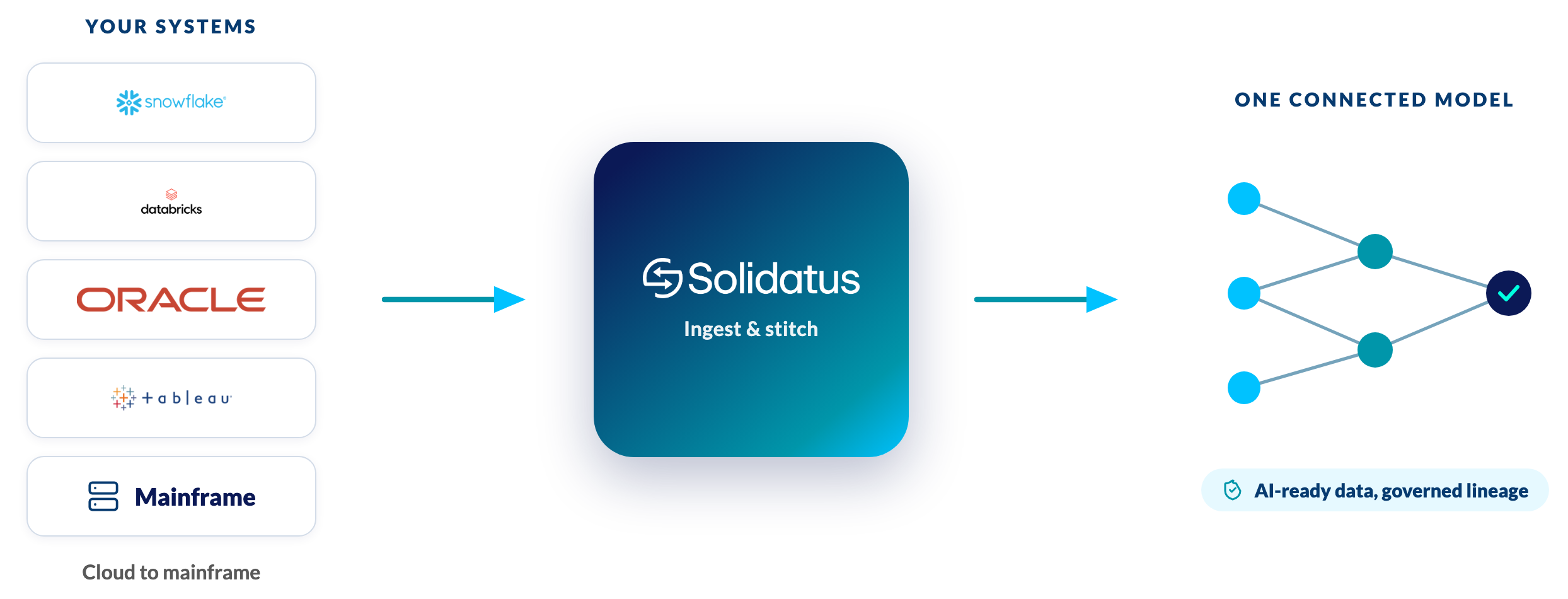
Solidatus integrations pull rich detail from each system, including metadata, transformations, and column-level lineage with stored-procedure parsing. They extract more than most tools, so you can trust what the map shows and trace an issue to its root.
Deeper extraction than a scan
Ingest metadata, lineage, and transformations from each system into a model, reference model, or properties, via API or file. Solidatus integrations extract deeper detail than most tools, so you can trust your data.
Column-level detail
Beyond a system’s structure, Solidatus captures column-level lineage and parses stored procedures, so you can trace an issue to the exact field and see what it touches.
Expert-led rollout
Solidatus integrations don’t require support to run. We still recommend a consultative, hands-on rollout with the Solidatus team so your first integration succeeds.
Solutions: technology and services for the systems that need more
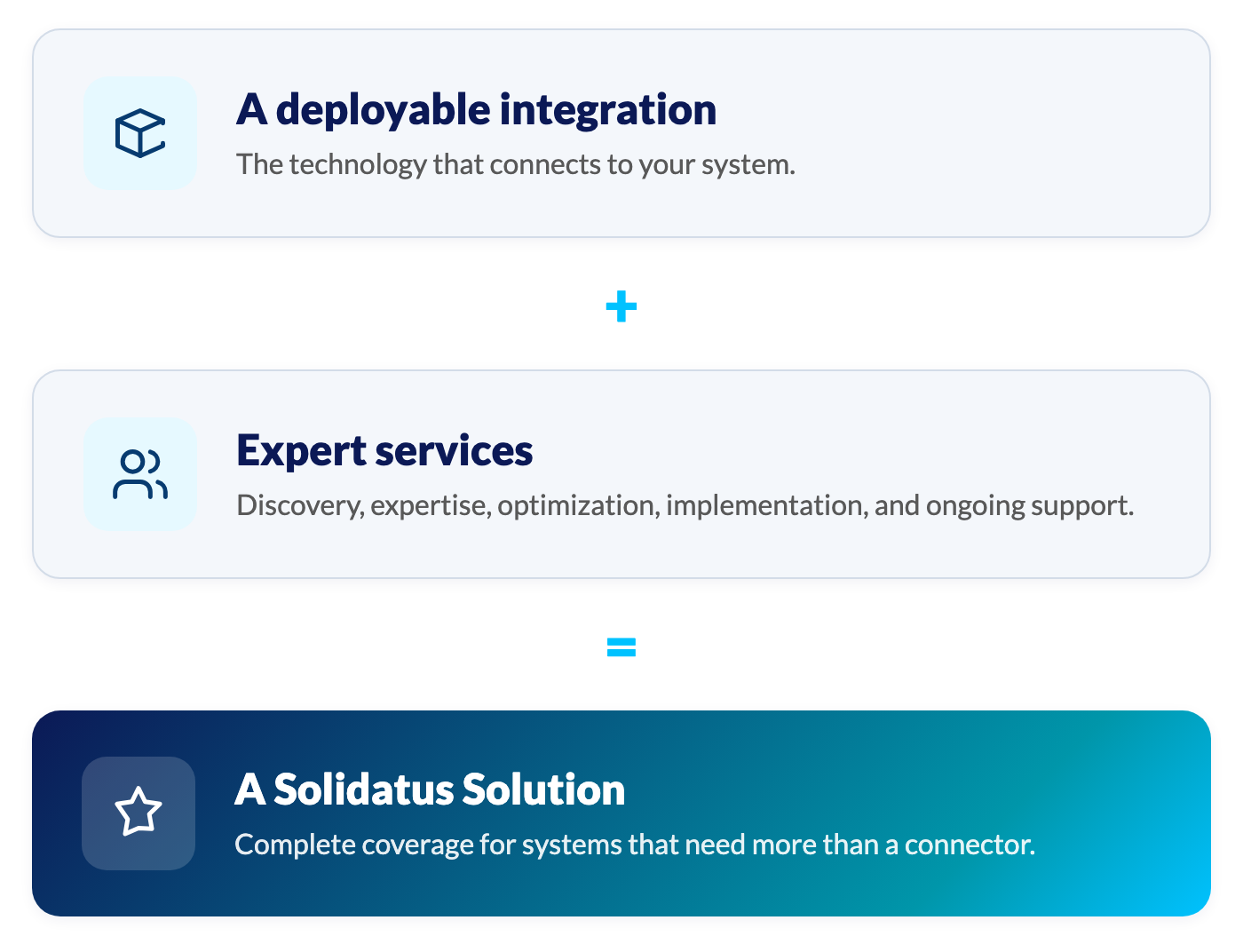
Some systems need discovery, planning, and expertise to connect. A Solidatus Solution pairs a deployable integration with services for technologies such as the mainframe, Microsoft Purview, and Microsoft Fabric.
- Discovery: define scope and requirements for your use case
- Expertise: knowledge of the technology and consulting on best practices
- Optimization: consulting on configurations and settings to optimize your use cases
- Implementation: support for the end-to-end solution
- Integration: a deployable software package for the target technologies
- Support: set hours of ongoing support for the solution




Example solutions
Deployable integrations paired with the services that connect harder technologies.
Microsoft Purview
Two-way integration with Microsoft Purview Data Governance.
- Push lineage from multiple technologies into Purview
- Sync glossary and business context such as domains and owners
- Consult on integration options and configuration
Microsoft Fabric
End-to-end lineage for data products across Fabric.
- Ingest structure or lineage from Fabric technologies
- Get consulting and implementation support for Fabric
- Choose from multiple integration options for Fabric components
Mainframe
Two-way integration with your mainframe systems.
- Ingest structure or lineage from Fabric technologies
- Get consulting and implementation support for Fabric
- Choose from multiple integration options for Fabric components
OpenLineage
Ingest automated lineage events from Spark, Airflow, and dbt.
- Ingest events at runtime or before deployment
- Connect automated lineage to legacy and manual steps
- Govern with version control and point-in-time history
Proven at enterprise scale
Reaching every system shows up in the numbers. At HSBC, two people modeled the entire wholesale credit and lending book in under six months, spanning 2,000 source tables, 80,000+ fields, and 45 source systems on one unified model. BCBS 239 and DORA reporting demand exactly this breadth of coverage.
“Only Solidatus gives you this level of control.” — Former Head of Wholesale Credit and Lending Data, HSBC
Frequently asked questions
01.
What systems does Solidatus integrate with?
Solidatus integrates with cloud and on-premises data platforms, warehouses, BI tools, ETL, and catalogs, including Snowflake, Databricks, Google BigQuery, Amazon Redshift, Oracle, SAP, Salesforce, Tableau, Informatica, and Collibra. It also supports the OpenLineage standard and reaches legacy and mainframe systems that scan-only tools miss.
02.
Does Solidatus support OpenLineage?
Yes. Solidatus ingests OpenLineage events from tools like Spark, Airflow, and dbt, at runtime or before deployment, then stitches them into a governed, version-controlled lineage model with business context and point-in-time audit history.
03.
Does Solidatus cover mainframe and legacy systems?
Yes. Beyond modern platforms, Solidatus reaches mainframe, legacy, and hard-to-instrument systems through deployable integrations paired with expert services, so your lineage runs end to end from cloud to mainframe rather than stopping at the first system a scanner cannot read.
04.
What is the difference between a Solidatus Integration and a Solution?
An Integration is a deployable connector that extracts metadata, lineage, and transformations from a system. A Solution pairs that technology with services, including discovery, expertise, implementation, and ongoing support, for technologies that need more configuration, such as mainframe, Microsoft Purview, and Microsoft Fabric.