







































Business intelligence and reporting
WebFOCUS
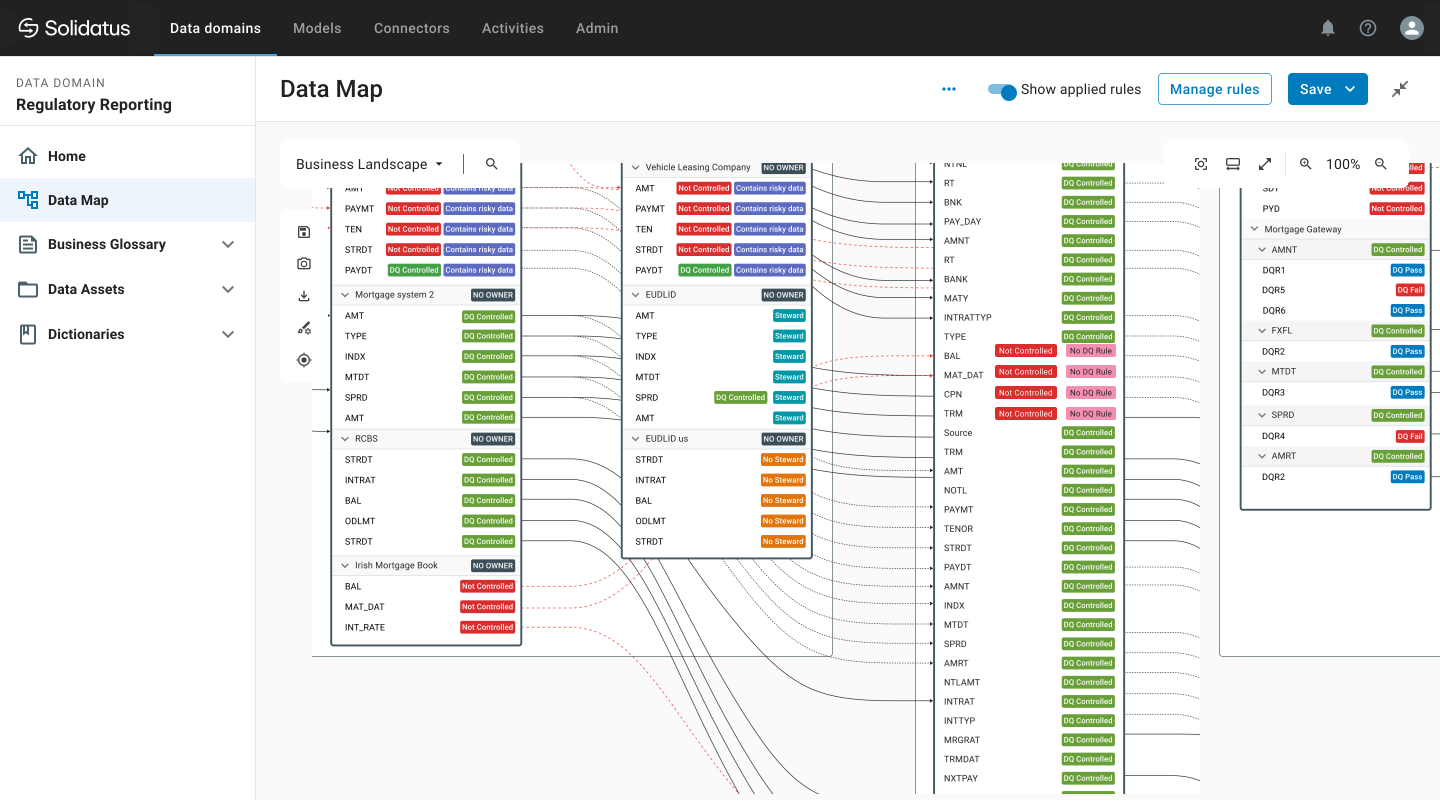
WebFOCUS reports are highly customizable, which usually makes them impossible to document. Solidatus reads what actually ran and builds column-level lineage from it.
What it is
Column-level lineage extraction from WebFOCUS report execution traces and metadata files.
What Solidatus captures
Column-level lineage inferred from executed WebFOCUS commands, with logical and physical datasource detail from the master and access files, plus report names as properties.
What you need
- WebFOCUS trace files (.trc) generated when reports run, plus the relevant master (.mas) and access (.acx) files.
- Files must already be present on a file system the connector can read. There is no upload mechanism.
- Where multiple trace files are supplied, each needs a SOLIDATUS_EXECUTION_TIMESTAMP variable set to a millisecond-precision timestamp so the connector can resolve execution order. Optionally, SOLIDATUS_REPORT_NAME can be set to control the report name recorded in the model.
- We recommend 2 CPUs and 8 GB RAM for this connector, and it is available as a JAR or a container image.
Good to know
This captures runtime lineage rather than static lineage, so what you see in the model is what actually ran. That is a real advantage for auditability. Every WebFOCUS estate is different, so we scope yours with you and tune the output.