




































Find Out More
- Discover how data lineage supports compliance for other regulations
- Find out more about Solidatus advanced data lineage

The Dodd-Frank Act is a key piece of US legislation passed in 2010, in response to the 2008 financial crisis. Its purpose is to more tightly regulate US banks, reduce financial instability, protect consumers and prevent another financial crisis.
The collapse of institutions like Silicon Valley Bank has reignited discussions about the effectiveness of banking regulations, underscoring the ongoing relevance of the Dodd-Frank regulation in shaping the future of financial sector oversight.
Solidatus’ customers rank among many of the world’s leading global banks and as such, Solidatus advanced data lineage supports banks in many of their regulatory requirements. This includes support for the Dodd-Frank Act.
Solidatus advanced data lineage supports stress testing, data risk management, and comprehensive Dodd-Frank reporting
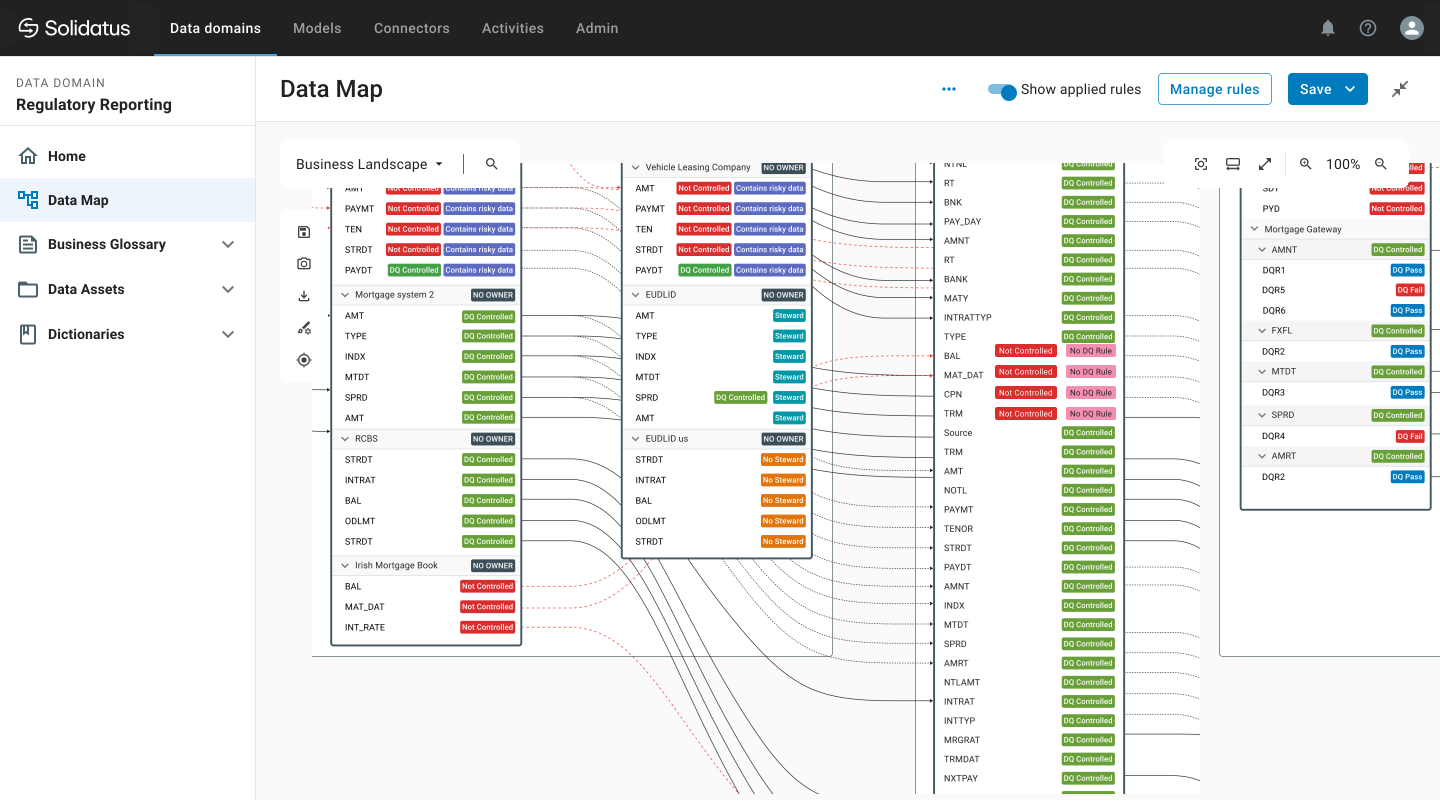
Solidatus advanced data lineage provides a full map view of all systems and data across your entire business, making it easier to manage Dodd-Frank data management requirements. You can see how data flows through your business, where it is used, which systems and processes are impacted by it and how it changes. It also lets you go from macro to micro, to see data on a granular level to truly understand data, its impact and risk.
Business contextual information can be added to these flows, so that you can see instantly on a map view, where data quality issues are, who the system owner is and which other systems are impacted by this risk. It also enables you to add parameters, so that if a set threshold is exceeded, you’ll receive alerts. You will know the data and systems impacted, the related use cases and reports impacted, contact the system owner and resolve the issue as quickly as possible, helping you quickly identify and reduce risk.
Solidatus advanced data lineage map view shows your data all the way from source, through transformations to its use cases and which reports data is used in. This level of transparency is essential for demonstrating Dodd-Frank compliance to regulators.
With Solidatus you can trace all the way back from a report, compliance requirement or use case to find the issue that causes a discrepancy in any report linked to all systems. This traceability ensures that banks can meet Dodd-Frank reporting requirements with greater efficiency and confidence.
Solidatus advanced data lineage includes bi-temporal version control, which enables you to create a what-if scenario and envisage what might happen to data, how it flows, the systems impacted in various possible situations.
You can create any number of what-if test scenarios to envisage the impact in a market turndown for example, or instant liquidity crisis.

How data lineage supports compliance with key data-related regulations
In under six months, a team of two was able to document and model HSBC’s entire Credit and Lending book,...

Understand how advanced data lineage from Solidatus ensures compliance with BCBS 239