










































AI regulations are relatively new – and the EU AI Act 2024 marks the first AI regulation in the world. But many more are likely to follow.
What is the EU AI Act and what does it regulate?
The Europe Artificial Intelligence Act (EU AI Act) is the world’s first comprehensive artificial intelligence law, setting clear requirements for transparency, accountability, and AI governance. It regulates artificial intelligence through a risk-based approach, categorizing AI systems into unacceptable, high, limited, and minimal risk levels to apply proportionate regulations. Designed to both protect users and encourage innovation.
To meet the EU AI Act’s transparency and accountability standards, organizations need to have complete visibility and control over their data. That’s why many companies turn to Solidatus.
An Advanced Data Lineage Solution for EU AI Act Compliance
Advanced data lineage supports your EU AI Act compliance. Solidatus helps you know exactly where and when you use AI, understand risk associated with your AI models, trust and disclose dataset details and to address data changes that put your AI models at risk.
Be Transparent about Your Use of AI. Know its Risk. Trust its Source.
Advanced data lineage provides a robust framework to prepare you for the EU AI Act requirements and future AI regulations
Be Transparent About Your Use of AI
As the EU AI regulation requires you to be transparent about your use of AI, you need to see where AI models are used in your business and the source of datasets used in them.
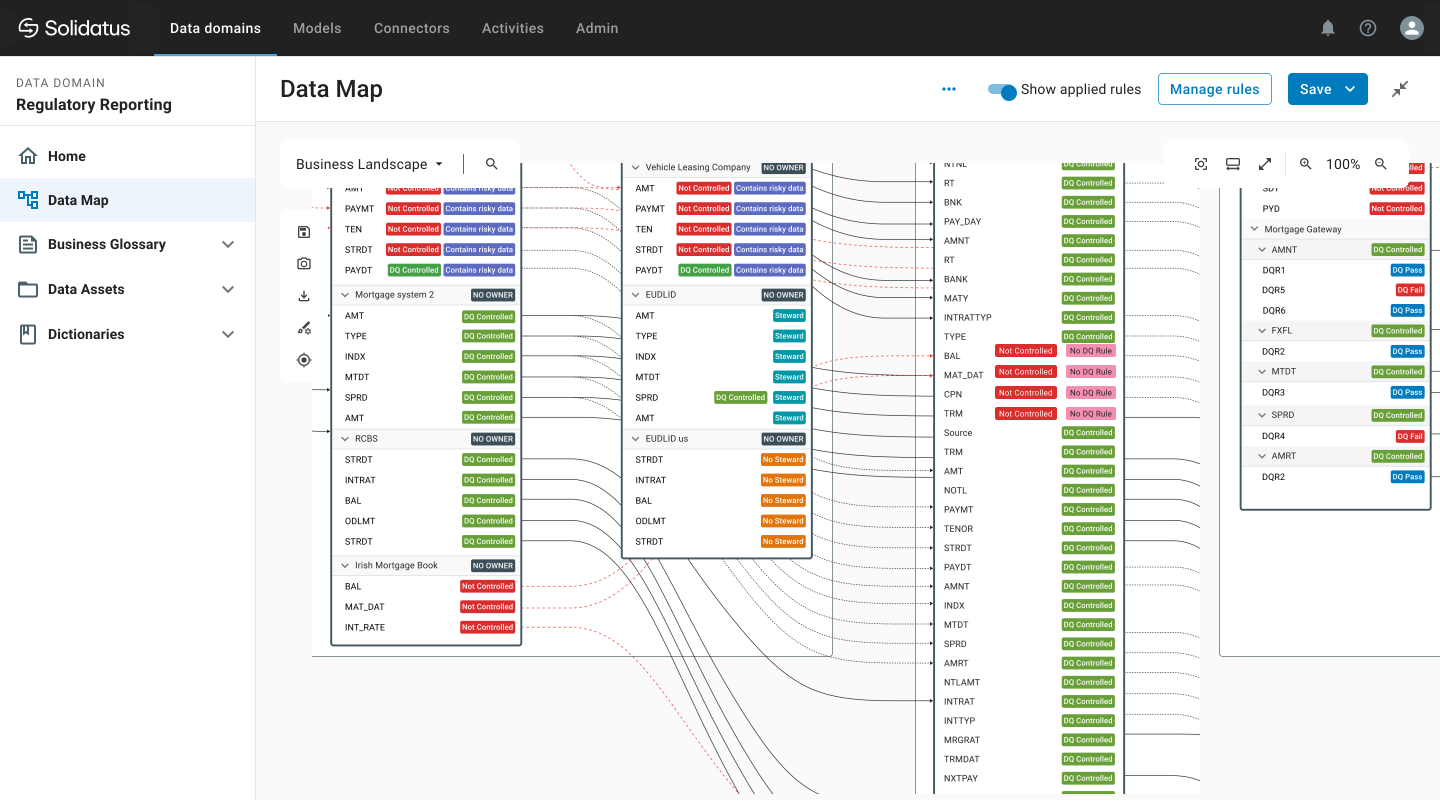
Solidatus advanced data lineage shows this across your entire business. Basic lineage only tracks your data flows – and only through a subset of systems – whereas advanced data lineage enables you to layer business context, such as regulations and controls on top. And lets you see this map view across all systems.
Track Your Risk Category for AI
The EU AI Act requires you to understand your risk relating to AI. If a model is labelled as high risk – such as AI systems used to evaluate credit worthiness or eligibility for loans – the Act requires you to ensure transparency. Transparency across all the data that flows into and out of your model, in ensuring high-quality datasets, and for a high level of security and controls to be in place.
Solidatus enables you to add business information to your lineage flows, so you can label AI models with a risk category based on what they are used for, see where the data came from and flows – and whether controls are in place.
Trust and Disclose Dataset Details
The EU AI law requires you to abide by copyright laws, as well as other regulations, such as GDPR.
Solidatus helps you see whether copyright and other laws have been adhered to in the datasets used in AI models.
Our bi-temporal version control also helps you visualize the impact of changes on datasets, that may impact downstream AI models.
Find Out More
- Learn more about data lineage and AI
- Discover how data lineage supports compliance for other regulations
- Find out more about Solidatus advanced data lineage
Pioneering Data Strategies: How Bank of New York is Shaping Business Success in the Age of AI
Find out about the role of AI and advanced data lineage as AI reshapes the future of business

How Data Lineage Supports Regulations Such as BCBS 239, DORA, GDPR and the EU AI Act
How data lineage supports compliance with key data-related regulations
Unveiling the Path: Why Data Lineage is Crucial for Building Effective AI Products
Read more about data lineage and its business impact, including on AI, BCBS 239 and more

Newsletter
Subscribe for the latest news, blogs, and resources.