

































Your Data Governance Team Already Built Your AI Governance Foundation

At the Gartner Data & Analytics Summit 2026 in Orlando, AI agents dominated the conversation. Every vendor booth featured them, and nearly every session title referenced them. The opening keynote from Adam Ronthal and Georgia O’Callaghan set the stakes: four out of five organizations are now deploying AI, but only one in five will achieve their stated ROI.1 Governance, they argued, should be treated as a value accelerator.
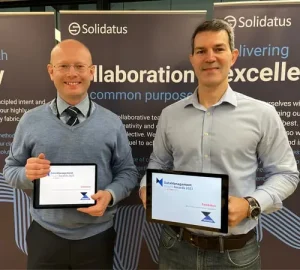
We recorded interviews with our CEO Philip Dutton and Solutions Engineer Caleb Watkins at the summit, alongside a conversation with Terrence Hedin, Director of Platform Data & Metadata at LSEG, one of the world’s largest data providers and a Solidatus customer. Philip and Terry also delivered a joint session covering how LSEG built an AI-ready data and metadata foundation at enterprise scale. Their perspectives trace an evolution from where lineage has been, to where it is now, to where it’s heading. They all pointed to the same conclusion: the most valuable AI governance infrastructure many organizations have is the lineage and metadata foundation their compliance teams built years ago.
Not long ago, data lineage lived in spreadsheets and tribal knowledge. When Terrence Hedin started building LSEG’s metadata practice, asking a data product owner about lineage would get a familiar response: “You’ll have to ask someone who knows about lineage.” The information existed, but it was scattered across disconnected documents, legacy UIs, and the institutional memory of long-tenured employees.
LSEG has moved past that stage. “Every business requirement spec includes lineage at an element level,” Terry said. “Every tech spec includes how you produce that lineage.” Lineage is no longer something that gets bolted on after the fact or tracked in a side process. It is embedded in how LSEG builds, releases, and governs data products across the organization.
LSEG formalized this shift through a Data Trust program built on four principles of trust, with Solidatus providing the lineage foundation. The program connects technical data flows to business context, ownership, regulatory requirements, and downstream decisions. It transformed lineage from a compliance artifact into the infrastructure that powers data product development, customer confidence, and AI readiness.
Gartner research presented at the summit reinforces why this kind of investment matters. In the session “Trust as the New Currency,” analyst Guido De Simoni found that organizations with graduated trust models achieve 64% compliance success compared to 23% for those without.2 The trust frameworks that organizations like LSEG built for regulators are directly applicable to AI governance.
“If we don’t understand what that data is, it’s very difficult for us to understand how we can use it, how we should use it, what value it can provide.” — Terrence Hedin, Director of Platform Data & Metadata, LSEG
The governance workflows that organizations like LSEG spent years building are mature and reliable, but they are also labor-intensive. Mapping code-level data flows, assessing regulatory compliance across hundreds of systems, and maintaining lineage as environments change have traditionally required specialized analysts and weeks of manual effort. As Gartner analyst Mark Beyer noted in his session on active metadata, metadata volume grows exponentially with agentic AI.3 Manual approaches to lineage and governance will not survive that scale.
Solidatus is the data lineage platform for regulated enterprises, and the AI Lineage Assistant was built to address that gap. Launched at the Gartner summit, the assistant is an agentic AI that operates directly within the Solidatus platform, executing complex governance workflows that previously required deep platform expertise.
Caleb Watkins, a Solidatus Solutions Engineer, walked through two use cases that drew strong interest at the booth. The first is code scanning. Traditional lineage tools have struggled to parse code-level data flows, and the manual alternative takes days. The assistant can take Python queries, map out the data flows, and link them to existing lineage for a true end-to-end picture. “Probably take you several days to do,” Caleb said. “Now with the assistant, you can do it in about 5-10 minutes.”
The second use case is regulatory compliance assessment. With all metadata centralized in Solidatus, organizations can load their regulations as reference models, including BCBS 239 and the EU AI Act, and ask the assistant to evaluate compliance across the data landscape. (For a deeper look at how lineage supports BCBS 239 compliance, see the BCBS 239 whitepaper.) CEO Philip Dutton describes the broader acceleration as 10x to 100x across governance workflows.
The assistant uses a bring-your-own-LLM model, so data stays within the customer’s control environment, and built-in hallucination protection validates every response against real metadata before it reaches the user. In financial services, where human-in-the-loop oversight is standard, that validation layer is a requirement.
The automation story matters, but the strategic argument Philip Dutton made at the summit may matter more. Whether an AI model is consuming data, a BI dashboard is pulling reports, or a regulatory system is sharing information across business lines, the obligations attached to that data are the same. Purpose limitations, storage rules, and sharing boundaries all travel with the data regardless of who or what is consuming it.
That means organizations do not need to build a parallel AI governance function from scratch. The operating model that compliance teams refined over years of regulatory scrutiny already addresses the core questions AI governance demands. Where did this data come from? Is it fit for this purpose? Who is responsible for it? What happens if it changes?
“You don’t have to change your operating model for AI governance,” Philip said. “You can use the same operating model that you’ve been using, which the organization knows, and it takes them a long time to get to know it and to feel comfortable with it. So this really gives you a nice accelerator.”
Philip also described the deeper opportunity. Solidatus captures organizational context that lives in people’s heads and legacy systems, knowledge that explains why a decision was made, what technology supports it, and what constraints apply. That context is what AI agents need to operate reliably, and it is exactly what LLMs cannot access on their own. Gartner analyst Andrés García-Rodeja reinforced this point. He estimates that by 2028, 60% of agentic analytics projects relying solely on the Model Context Protocol will fail due to the lack of a consistent semantic layer.4 The lineage and metadata infrastructure that compliance teams maintain, and that Solidatus provides as a platform, is the semantic foundation those projects are missing.
Ronthal, Adam, and Georgia O’Callaghan. “Opening Keynote: The State of Data and Analytics.” Gartner Data & Analytics Summit, March 9-11, 2026, Orlando, FL.
De Simoni, Guido. “Trust as the New Currency: A Paradigm Shift in Governance.” Gartner Data & Analytics Summit, March 9-11, 2026, Orlando, FL.
Beyer, Mark. “Using Active Metadata to Support Data Agents.” Gartner Data & Analytics Summit, March 9-11, 2026, Orlando, FL.
García-Rodeja, Andrés. “How to Build the Context Layer for Reliable AI Agents.” Gartner Data & Analytics Summit, March 9-11, 2026, Orlando, FL.
01.
The AI Lineage Assistant is an agentic AI built into the Solidatus platform that executes complex governance workflows through natural language interaction. It scans code to map data flows, assesses regulatory compliance against frameworks like BCBS 239 and the EU AI Act, and enriches metadata across the data estate. The assistant uses a bring-your-own-LLM model, keeping all data within the customer’s control environment, and validates every response against real metadata to prevent hallucinations. CEO Philip Dutton describes acceleration of 10x to 100x across governance workflows compared to manual approaches.
02.
Data lineage documents where data comes from, how it transforms, and what obligations are attached to it. Those obligations, including purpose limitations, storage rules, and sharing boundaries, apply to AI models the same way they apply to BI dashboards or regulatory reports. Organizations with mature lineage programs can extend their existing compliance operating model to cover AI use cases without building a separate governance framework. Gartner analyst Guido De Simoni found that organizations with graduated trust models achieve 64% compliance success compared to 23% for those without.
03.
LSEG built a Data Trust program on four principles of trust with Solidatus providing the lineage foundation. Every business requirement spec includes lineage at an element level, and every tech spec includes how to produce that lineage. The program connects technical data flows to business context, ownership, and regulatory requirements. LSEG now treats metadata as a strategic asset, publishing it as commercial data products for both internal and external customers
04.
A bring-your-own-LLM (BYOLLM) model allows organizations to connect their preferred large language model to the Solidatus platform rather than routing data through an external AI service. This approach keeps all data and metadata processing within the customer’s own environment, addressing the primary security concern regulated enterprises have about AI in governance workflows. The Solidatus AI Lineage Assistant adds hallucination protection on top of the customer’s LLM, validating every response against metadata in the platform before it reaches the user.
05.
Data catalogs like Collibra, Alation, Atlan, and Microsoft Purview provide metadata indexing and basic technical lineage as a byproduct of cataloging. Business lineage platforms like Solidatus go deeper by mapping end-to-end data flows with bi-temporal audit trails, regulatory policy overlays, ownership and accountability context, and rules-based impact analysis. For AI governance, the difference is significant. Catalog-level lineage can tell you which tables feed a model, but business lineage can tell you whether that data is fit for the intended purpose, who owns it, and what regulatory obligations apply.
06.
Gartner analyst Andrés García-Rodeja estimates that by 2028, 60% of agentic analytics projects relying solely on the Model Context Protocol (MCP) will fail due to the lack of a consistent semantic layer. MCP provides connectivity between agents and data sources, but agents also need business context, regulatory metadata, and lineage to produce reliable, explainable results. The lineage and metadata infrastructure that compliance teams maintain provides exactly this kind of semantic foundation, which is why organizations with mature governance programs are better positioned for agentic AI than those starting from scratch.
Published on: June 12, 2026

What your data lineage has to prove before an examiner asks about a past decision
What runtime capture reaches, and what you have to model yourself.

Why a residency commitment is not evidence of custody.

Why data governance programs fail

Three criteria that make regulatory data lineage reusable

How data lineage brings assessment discipline to financial services data flows
A buyer's guide to choosing the foundation of your AI stack.

Pre-change impact analysis for data estates that feed AI

What BCBS 239 and SR 26-2 now demand at the column level

MCP support, Bring Your Own LLM, and an assistant that keeps its context
What regulators expect when they ask you to prove data lineage

Five data lineage myths that the masterclass got right

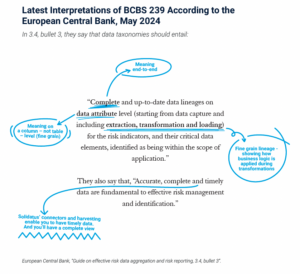
In May 2024, the ECB released its ‘Guide on effective risk data aggregation and risk reporting (RDARR)’...
Read why advanced data lineage is crucial for business success
An update on some recent developments in our latest product releases
Read more about data lineage and its business impact, including on AI, BCBS 239 and more
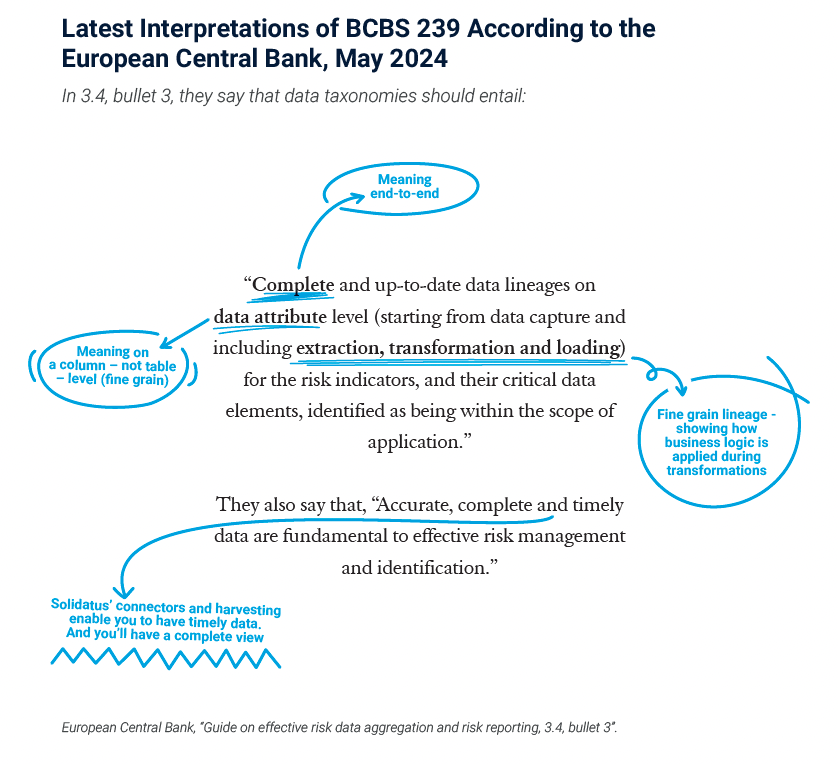
Navigate BCBS 239’s rigorous standards with advanced data lineage
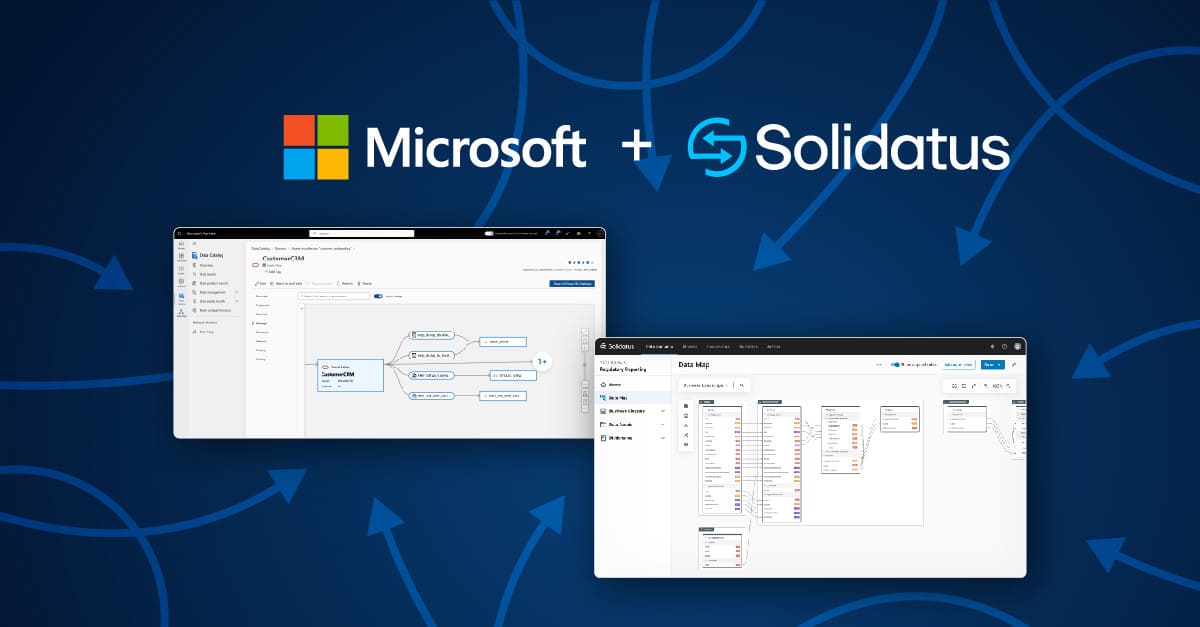
Solidatus data lineage partners with Microsoft Purview to help enterprises trust their data

Read about the new Solidatus interface
Read our key takeaways from Gartner D&A Summit 2024

Video introducing our new interface and core features like Connected Catalog and Data Map
Read about Solidatus and Snowflake Horizon's governance solution
Explore the various aspects of data lineage and its crucial role in your organization.
Basel III is changing – are you prepared? Read 3 easy steps with Solidatus
Read how we helped successfully launched the Houston Women in Data Chapter

Exploring the parallels between urban planning and data planning projects

71% of senior data leaders in financial services polled are close to quitting their jobs

Take a look at what's new in our partnership with Snowflake

VP Product, Tina Chace, reflects on the Gartner conference, covering data governance and AI

We’ve linked the Eurovision Song Contest to the realm of data governance and data lineage

In the latest Gartner® research note, find out what active metadata is

The role of metadata, dynamic visualization and inference across metadata

Automatic connectors are essential for efficiently mapping metadata but not all are created equal. We look at the most important...

We discuss injecting active metadata into your governance and 4 other things we’re looking forward to at the Gartner® Data...